




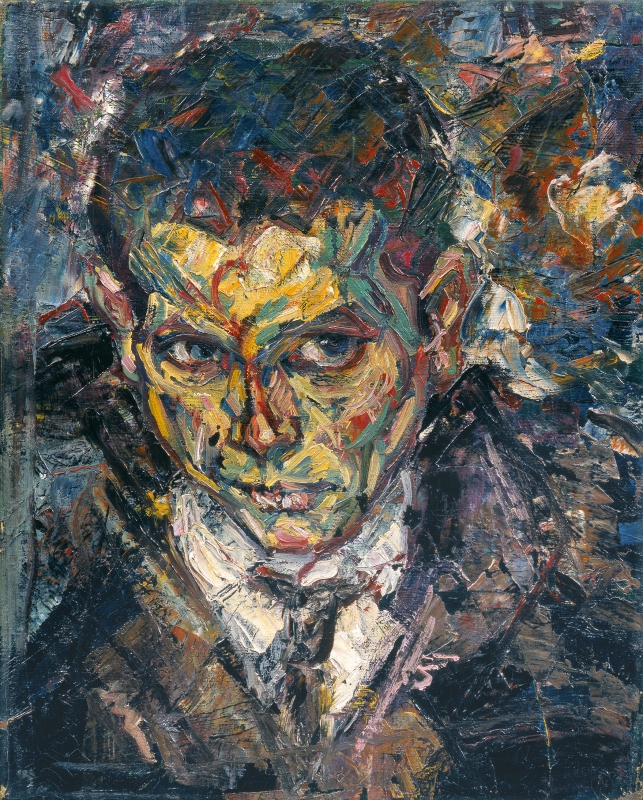
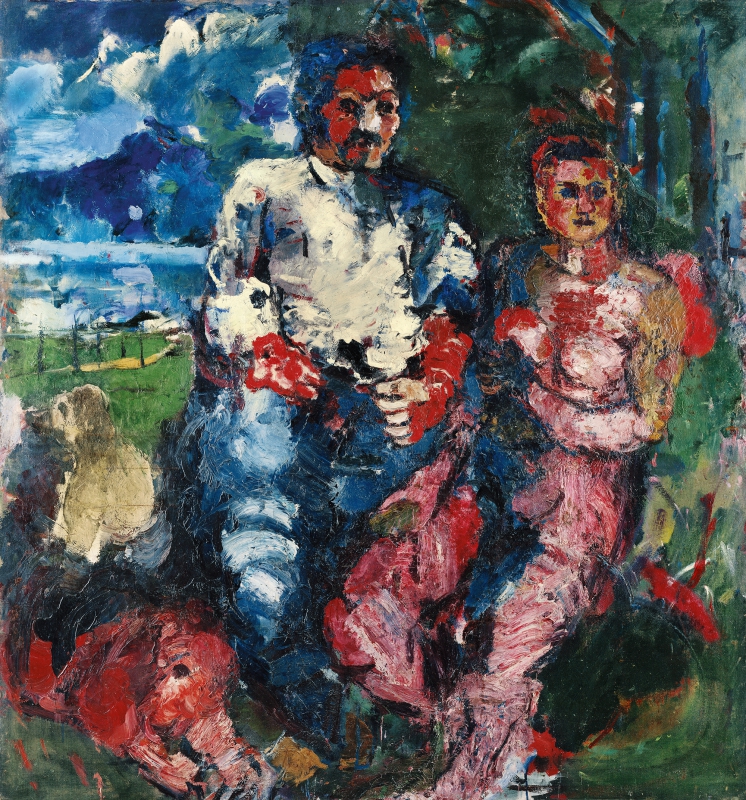
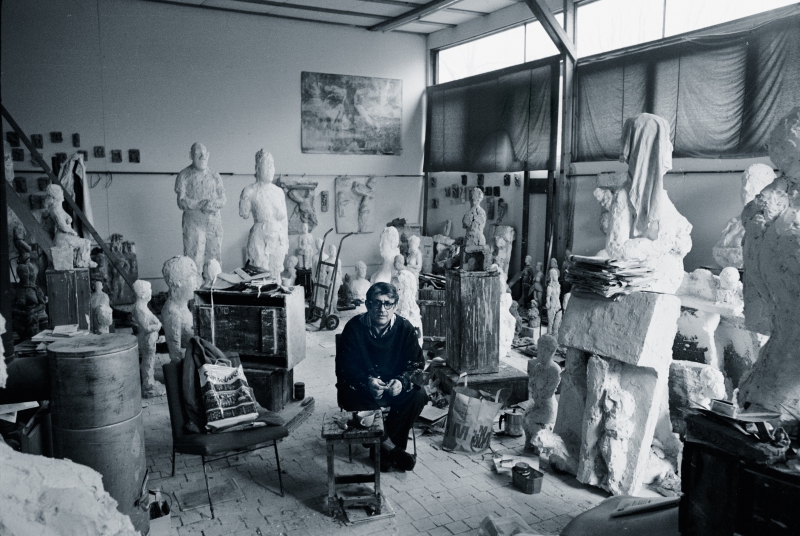
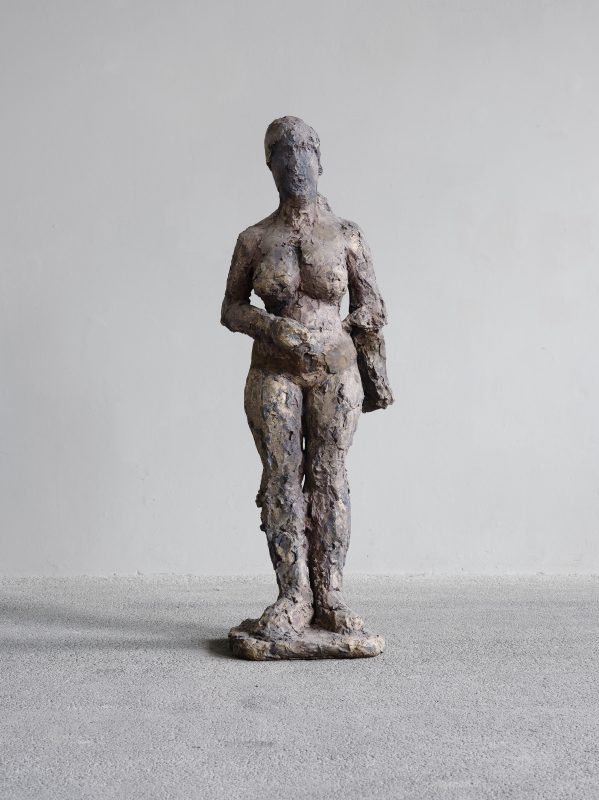
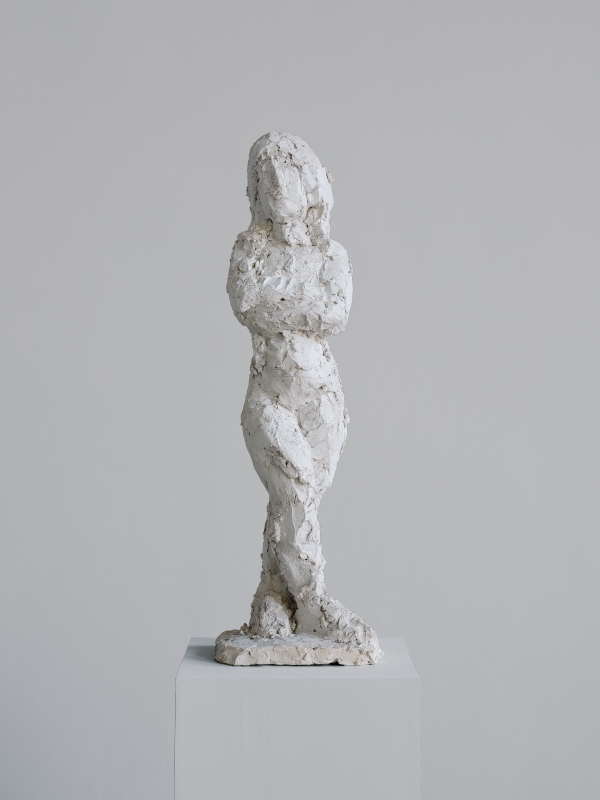
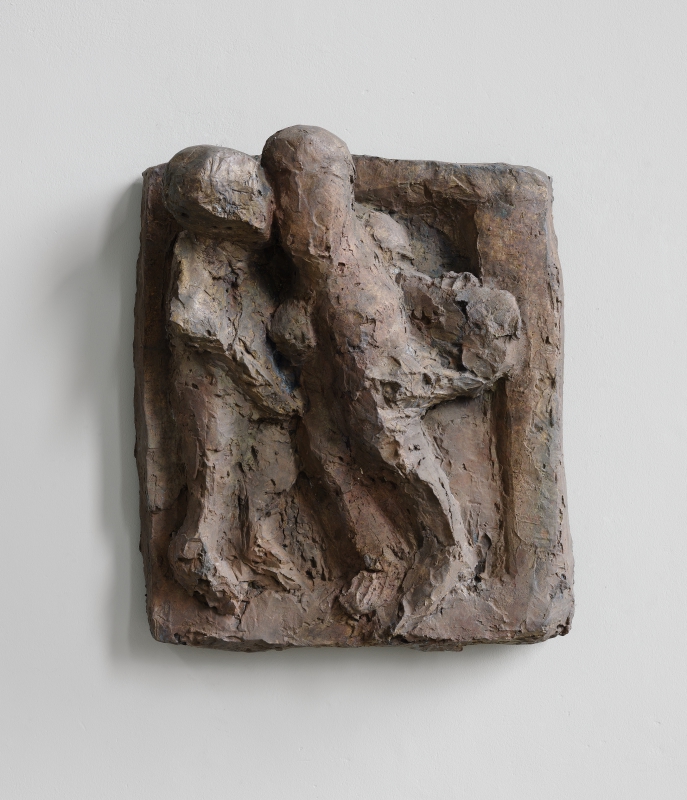
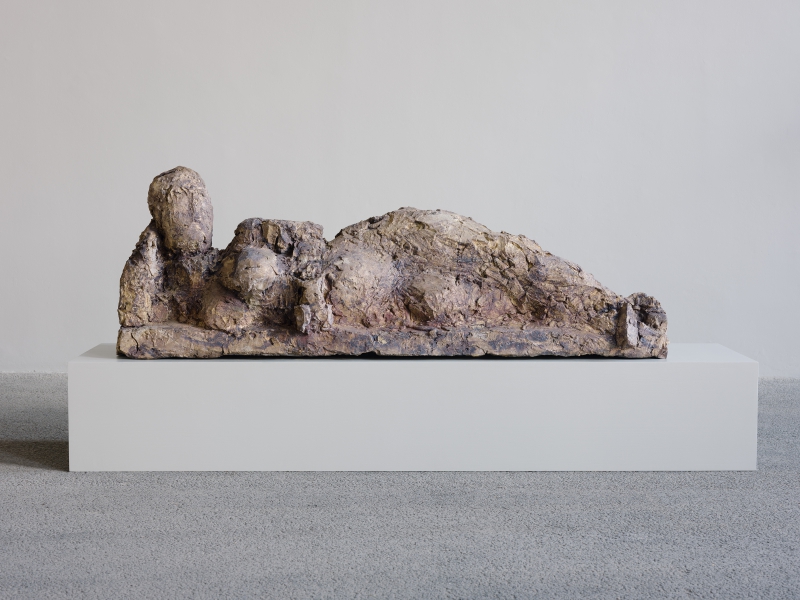
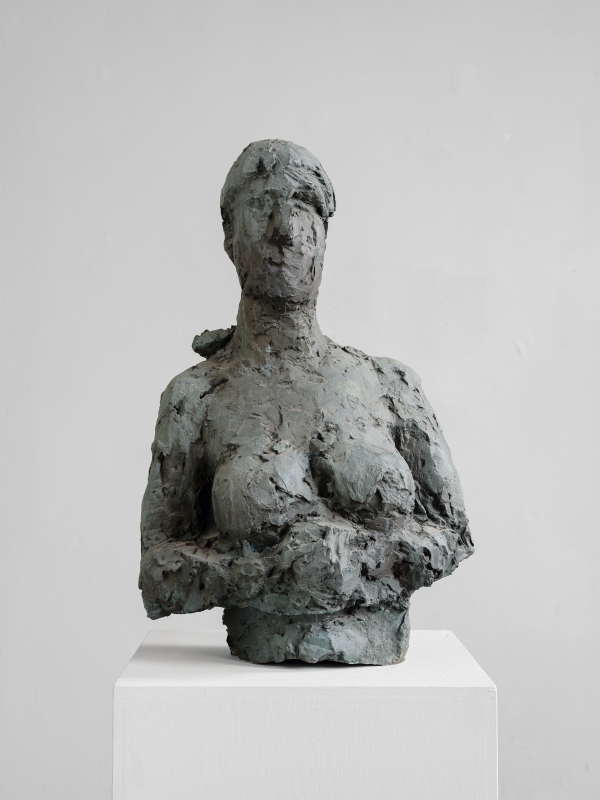
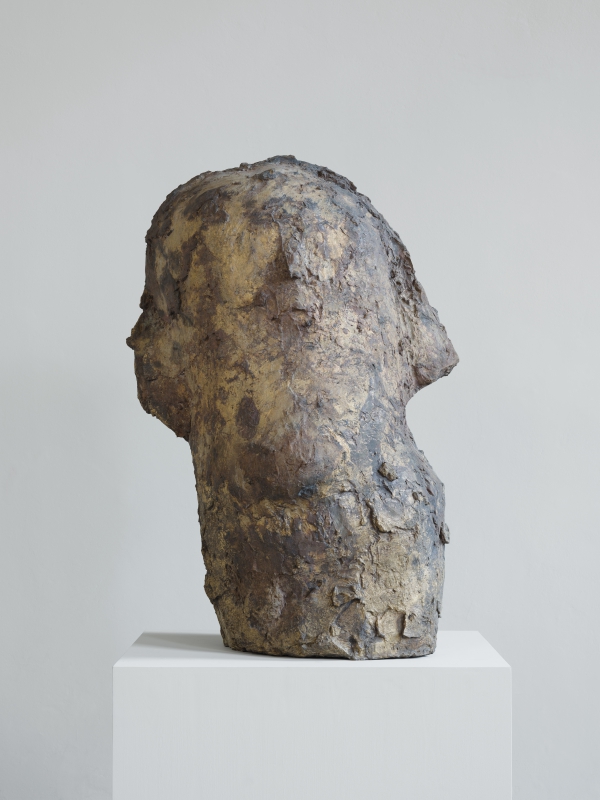
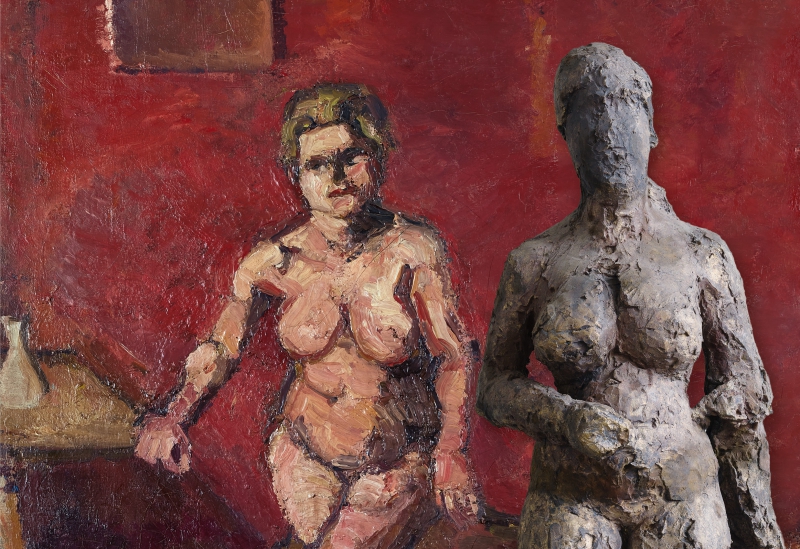
Since the Italian Renaissance, the increasingly prominent question of a hierarchy of the arts, one that fueled, among other things, the rivalry between painting and sculpture, came to an end with the advent of modernism. In this exhibition, where the work of a sculptor encounters that of a painter, the intention is not to revive the paragone debate in art-theoretical terms, but rather to stage a dialogue between two artistic personalities who, despite their differences in historical, spatial, and cultural contexts, reveal striking analogies both in formal aesthetics and in the phenomenology of their work. This juxtaposition of Herbert Boeckl (1894–1966) and Hans Josephsohn (1920–2012), who never met during their lifetimes, nevertheless highlights fundamental parallels in their understanding of corporeality, materiality, and the process of form-finding.
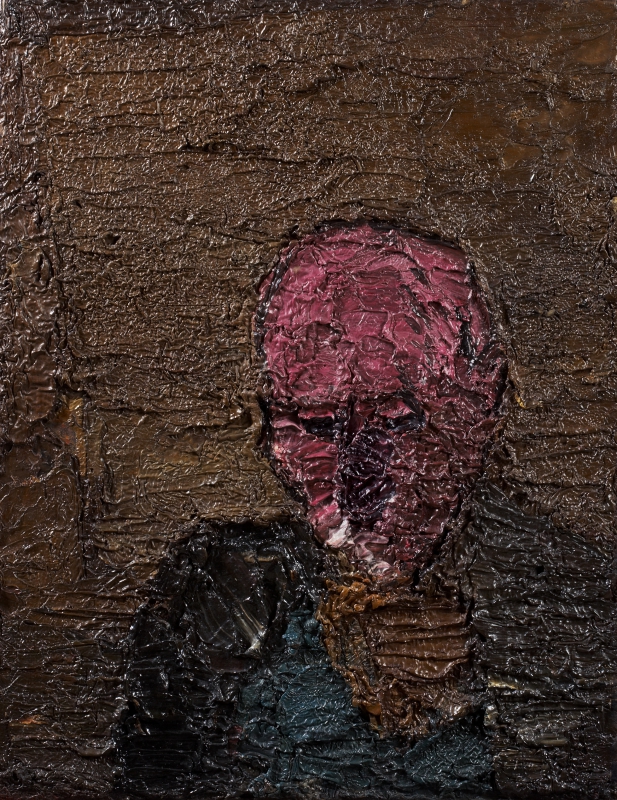
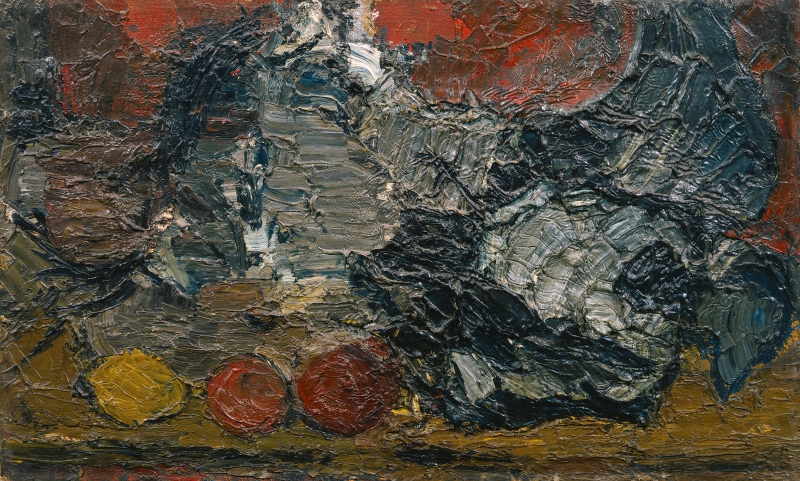
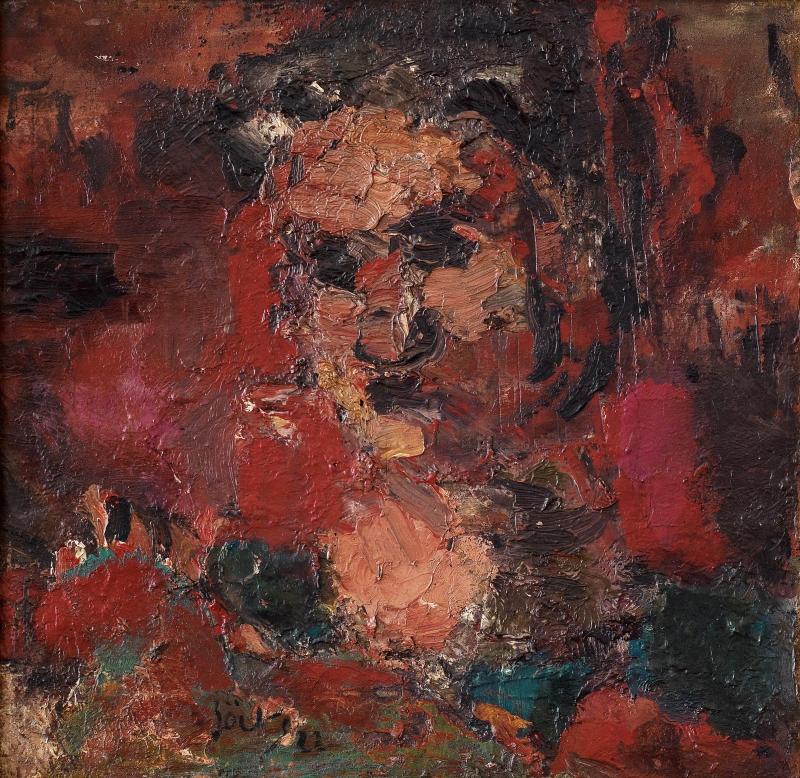
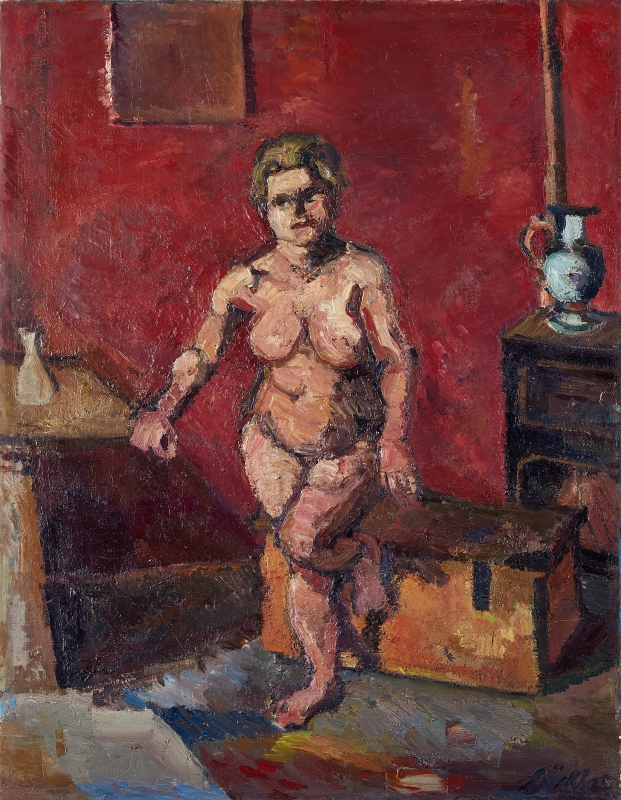
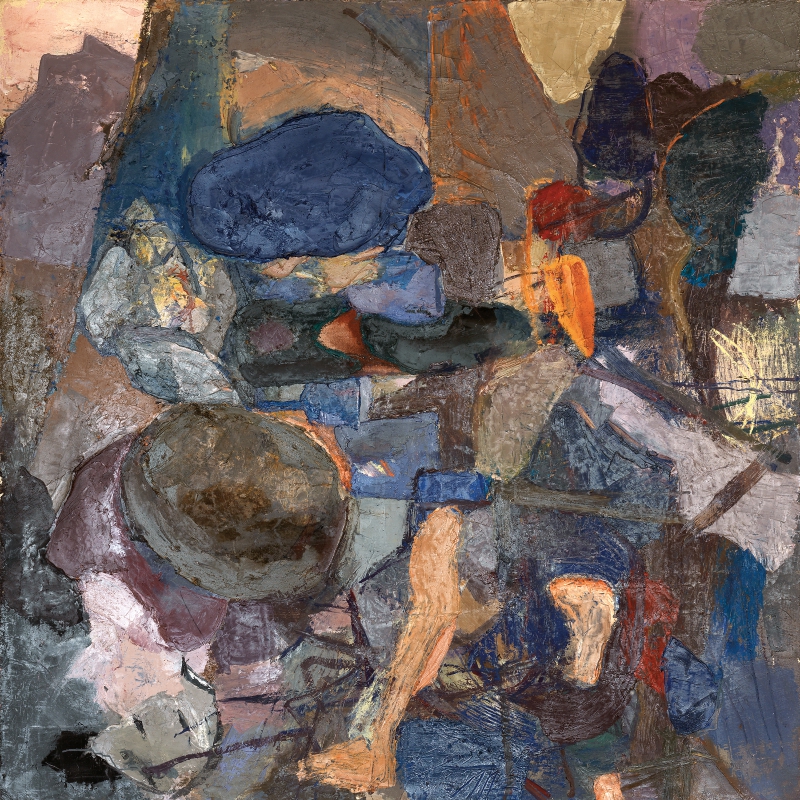
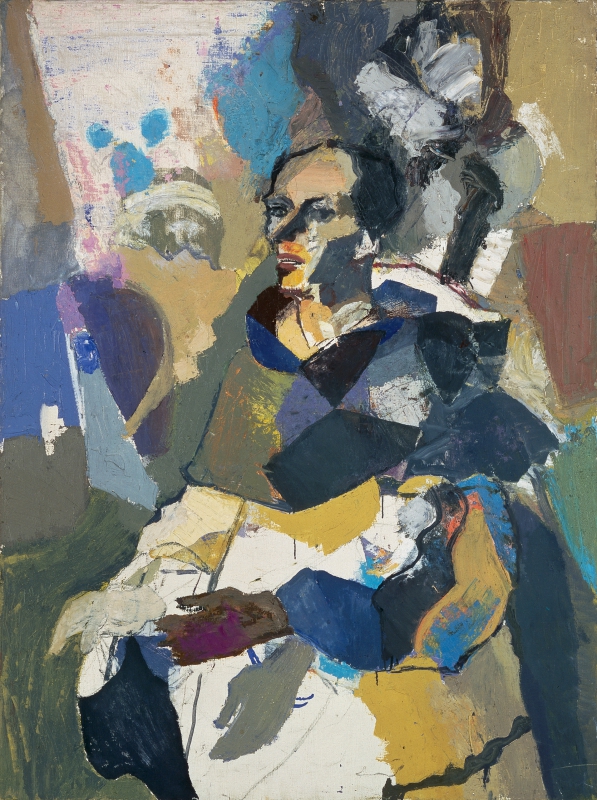
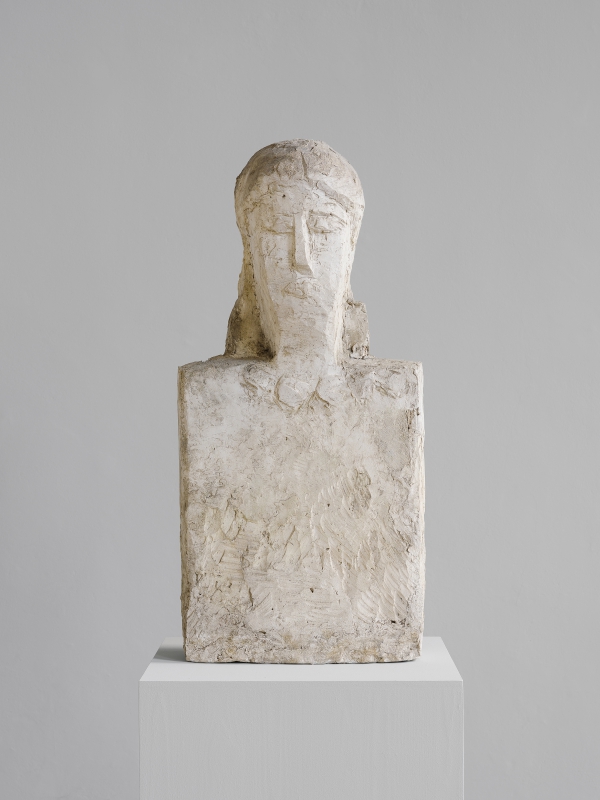
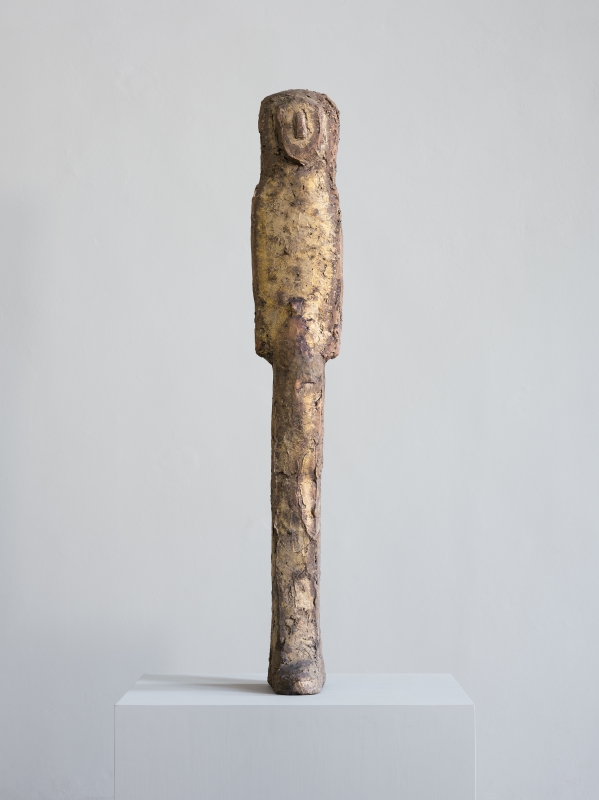
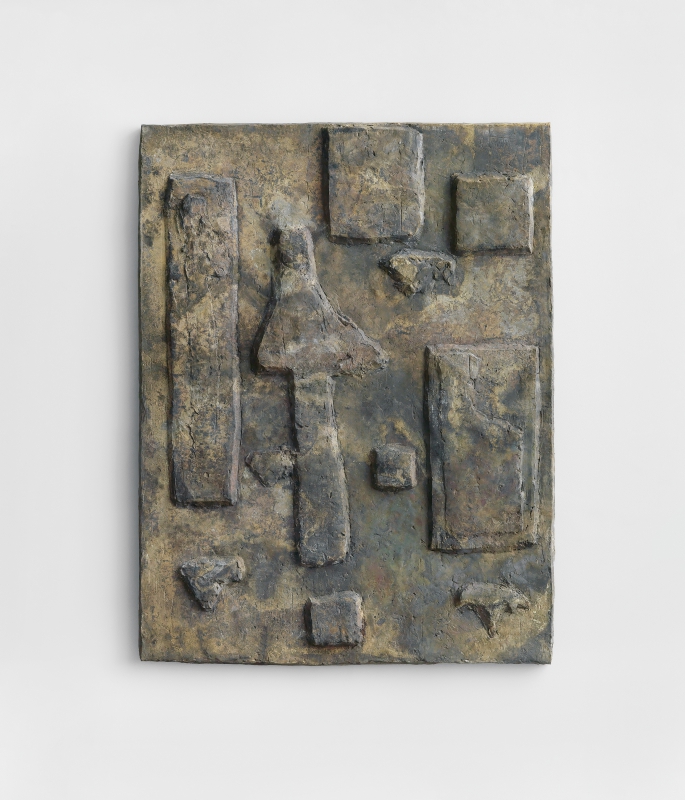
Neither Boeckl nor Josephsohn, and this despite the growing prominence of abstract art since the 1950s, pursued a path into abstraction. They remained committed to figuration and, in particular, to the human figure as a bearer of artistic expression. Although both engaged in a pronounced process of abstraction in their depictions of the human body, often dispensing with anatomical detail, they sought to distill the essential through radical simplification and intense concentration. As a result, many of their figures appear de-individualized and stylized, presenting a universal form of the human. Despite, and perhaps because of, this reduction, which transforms the “portrayed” into pure form, their figures possess a powerful expressive force. This specific auratic presence is evoked through expressive simplicity, formal reduction, and not least an impressive material immediacy. Their shared interest in the physicality of materials provides yet another point of correspondence: while Boeckl applies paint thickly, almost sculpturally or in relief-like layers, Josephsohn works in a comparably additive manner in his plaster modeling and the castings derived from it.
Precisely because both artists ignore fashions and trends and quell any illustrative attempts at representation from the outset, timelessness and a universal, elemental, indeed, almost archaic, formal language take on a dominant role. This can be seen, for example, in Josephsohn’s stela-like figures, as well as in his heads and half-figures, which appear as timeless monoliths. In Boeckl’s case, it is the monumental figure compositions and landscapes that convey a sense of the supra-temporal. Another shared formal characteristic lies in the processual nature of their work: in both cases, the process of creation remains legible. With Boeckl, it is the deliberately visible brushstrokes executed in an expressive manner and the sedimented layers of paint; with Josephsohn, it is the traces of plaster being applied and removed by hand, which are then transferred into the cast. Both artists compellingly articulate their interest in rugged and scarred surfaces within the media of painting and sculpture.
Finally, the combined presentation of Herbert Boeckl and Hans Josephsohn will raise questions of existentiality in the sense of a universal engagement with human existence, opening up new associative spaces.
Share and follow