KOLOMAN MOSER, Judith and Holofernes, 1916 © Leopold Museum, Vienna
Viennese Stories – The Leopold Museum Blog
POWERFUL WOMEN
IN THE BIBLE
“Strength and dignity
are her garment…”
“Strength and dignity are her garment; she laughs at the days to come” (Proverbs 31:25), reads the biblical praise of the virtuous woman. A verse that unmistakably associates the female sex with strength and confident action. And in Genesis we encounter the following: “So God created humankind in his image […] male and female he created them” (Genesis 1:27). Thus, the very first chapter of the Bible inscribes the fundamental equality of man and woman, since both were created in the image of God.
A fitting reminder as we turn our attention to the women of the Bible. Perhaps biblical heroines enjoy particular popularity in visual art precisely because they appear so much more rarely in Christianity’s central text than their male counterparts. Visitors to the Leopold Collection can encounter several of them…
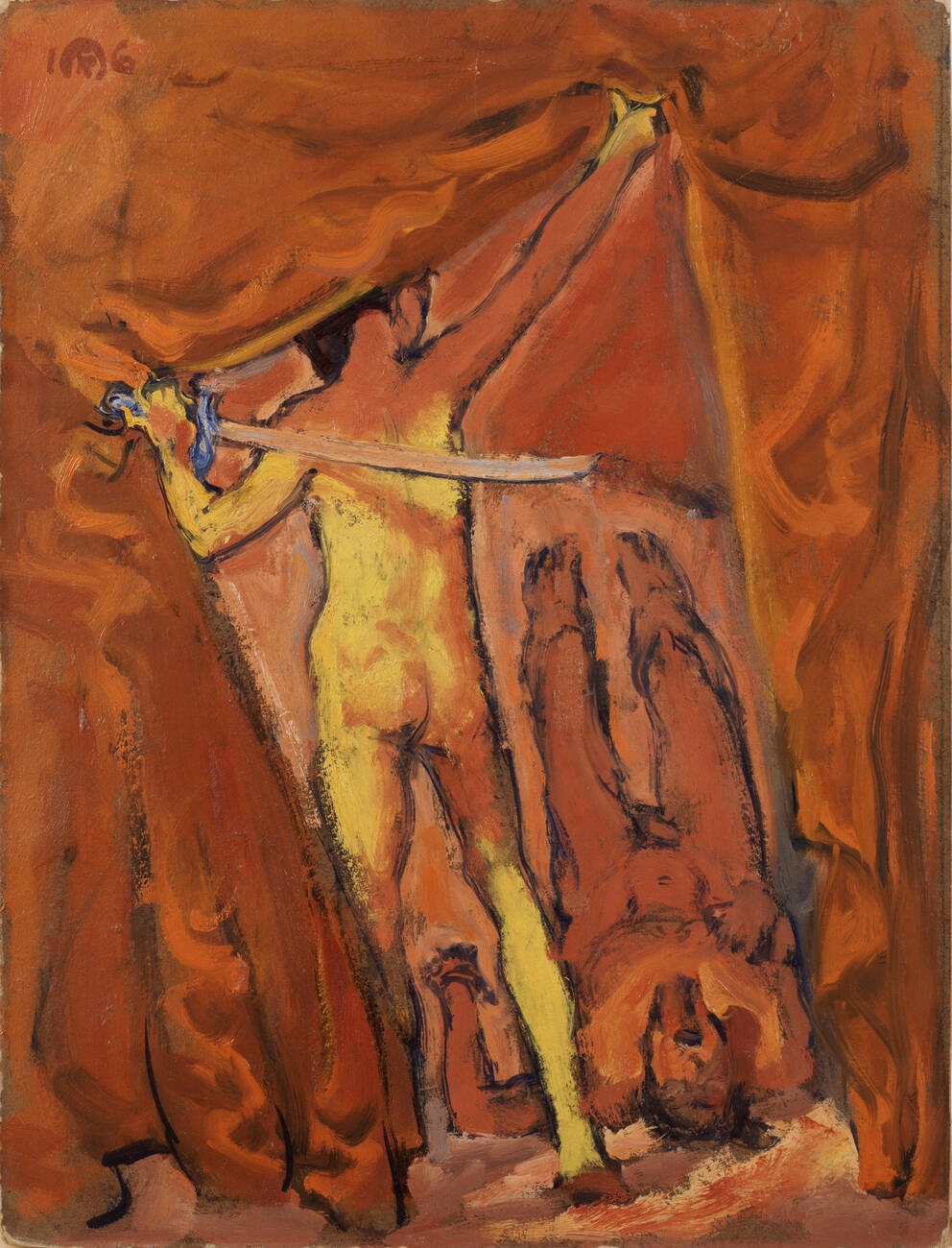
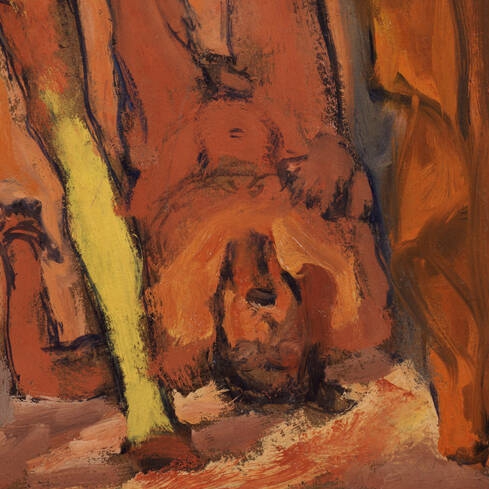
In 1916, Koloman Moser (1868–1918) painted a work on Judit and Holofernes. Spelled without an “h” in the biblical text, Judit is the heroine who, according to tradition, saved her people from the brutal commander Holofernes by beheading him under cover of night. She proclaimed: “I will perform a deed which will go down through all generations among our nation” (Judith 8:32).
Moser depicts Judith as a nude figure seen from behind, rendered in a dynamic contrapposto. In her left hand she holds the murder weapon – Holofernes’ own sword. The space is reduced to a sharply foreshortened perspective; Judit lifts the curtain and reveals a glimpse into the tent of the intoxicated commander. Red, the colour of blood but also of strength, dominates the painting. Precisely through her anonymity, Moser’s Judith becomes a point of identification for anyone who takes action to protect their loved ones.
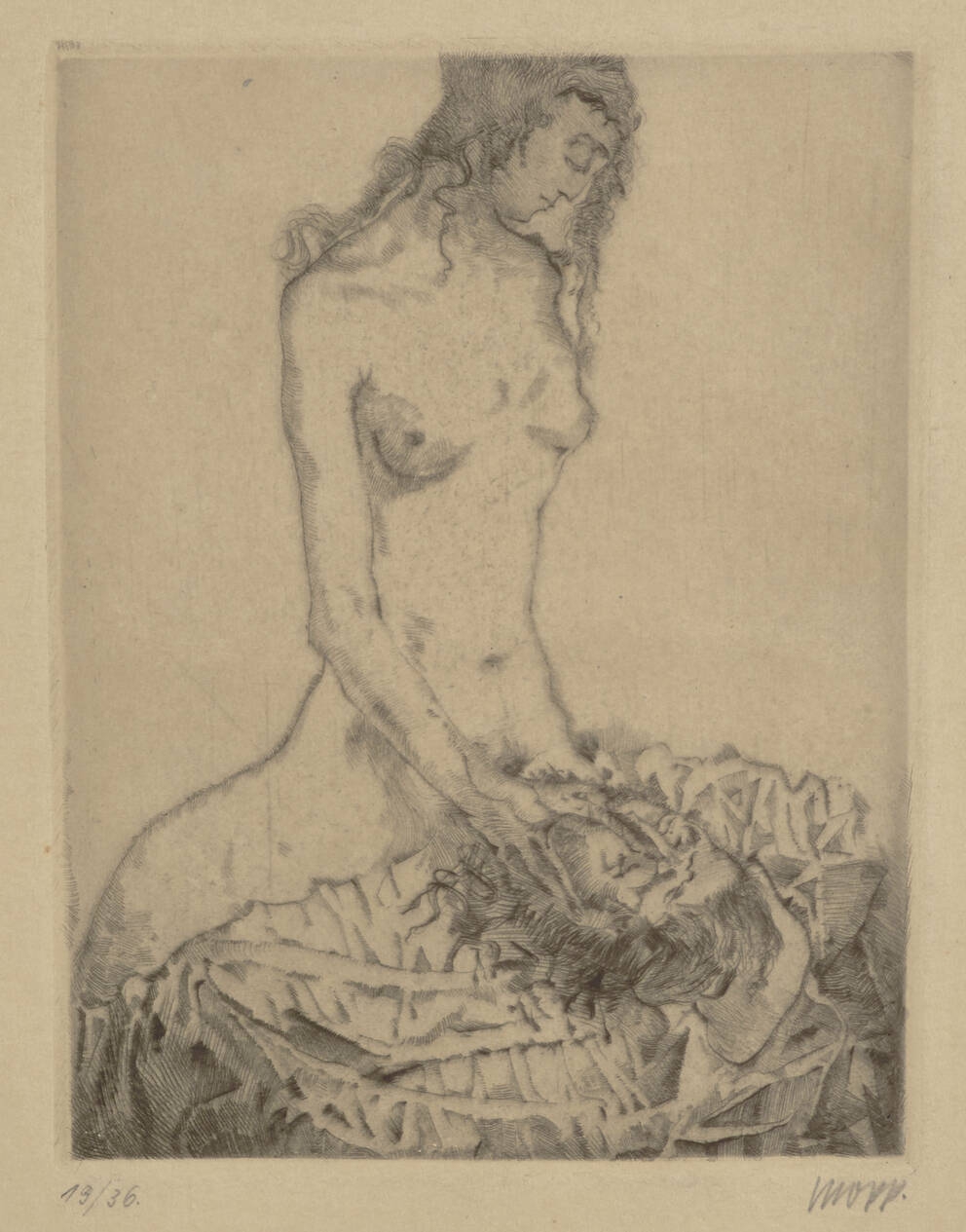
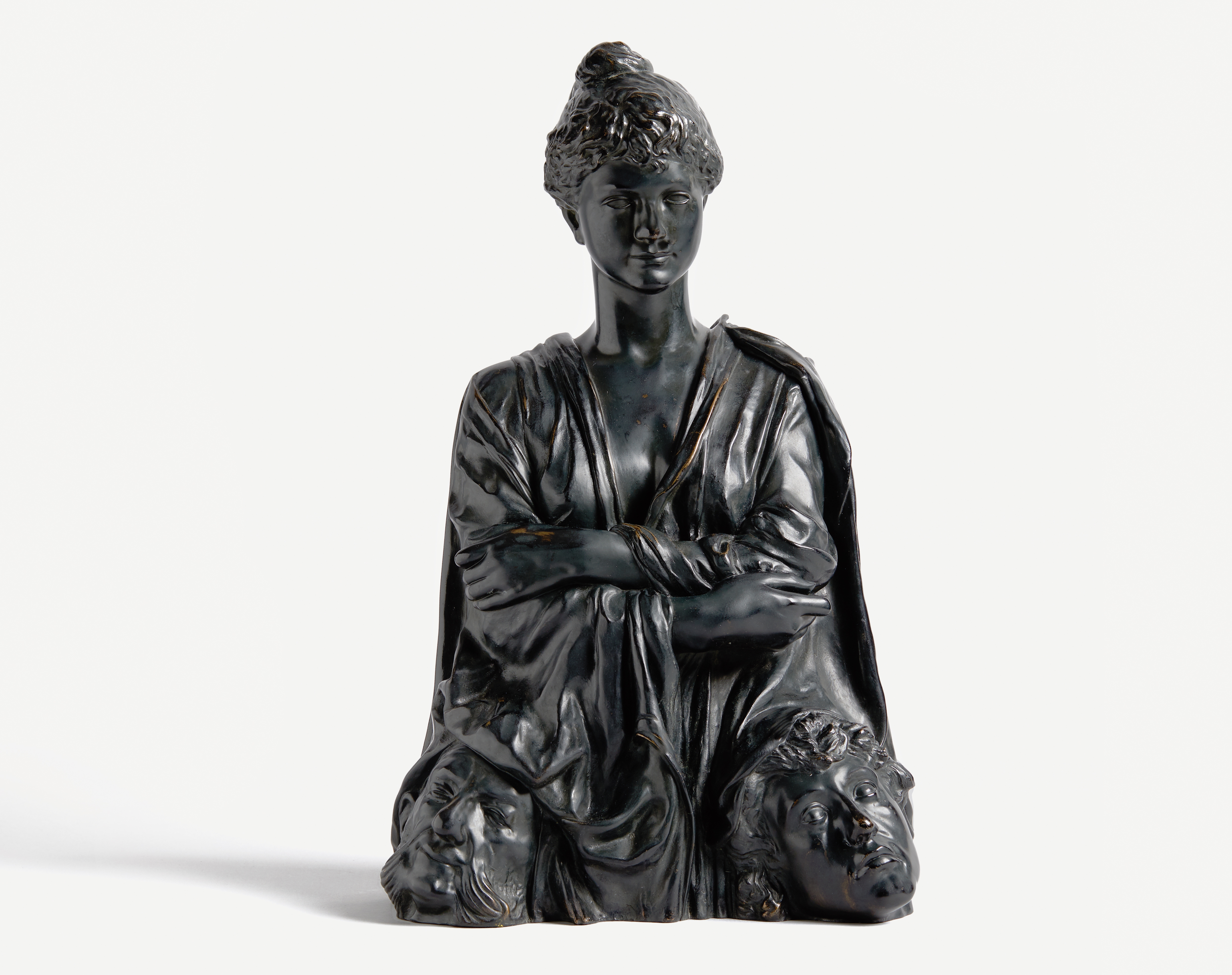
A figure easily mistaken for Judit in iconography is Salome – although the name itself only appears in later biblical exegesis. Unlike Judit, Salome does not “dirty her own hands”; rather, her mother Herodias employs her daughter’s beguiling dance as a tool of political seduction. So enthralled is her stepfather, King Herod Antipas, that he agrees to fulfil Herodias’ fervent wish: he delivers her the head of John the Baptist, who had condemned her marriage to Antipas, her brother-in-law.
Max Oppenheimer’s (1885–1954) etching shows Salome calmly gazing upon the severed head as she holds it with both hands. The figure exudes an almost meditative quality; we cannot begin to guess her emotional state. What does Salome feel at the sight of the dead man whose end she helped bring about?
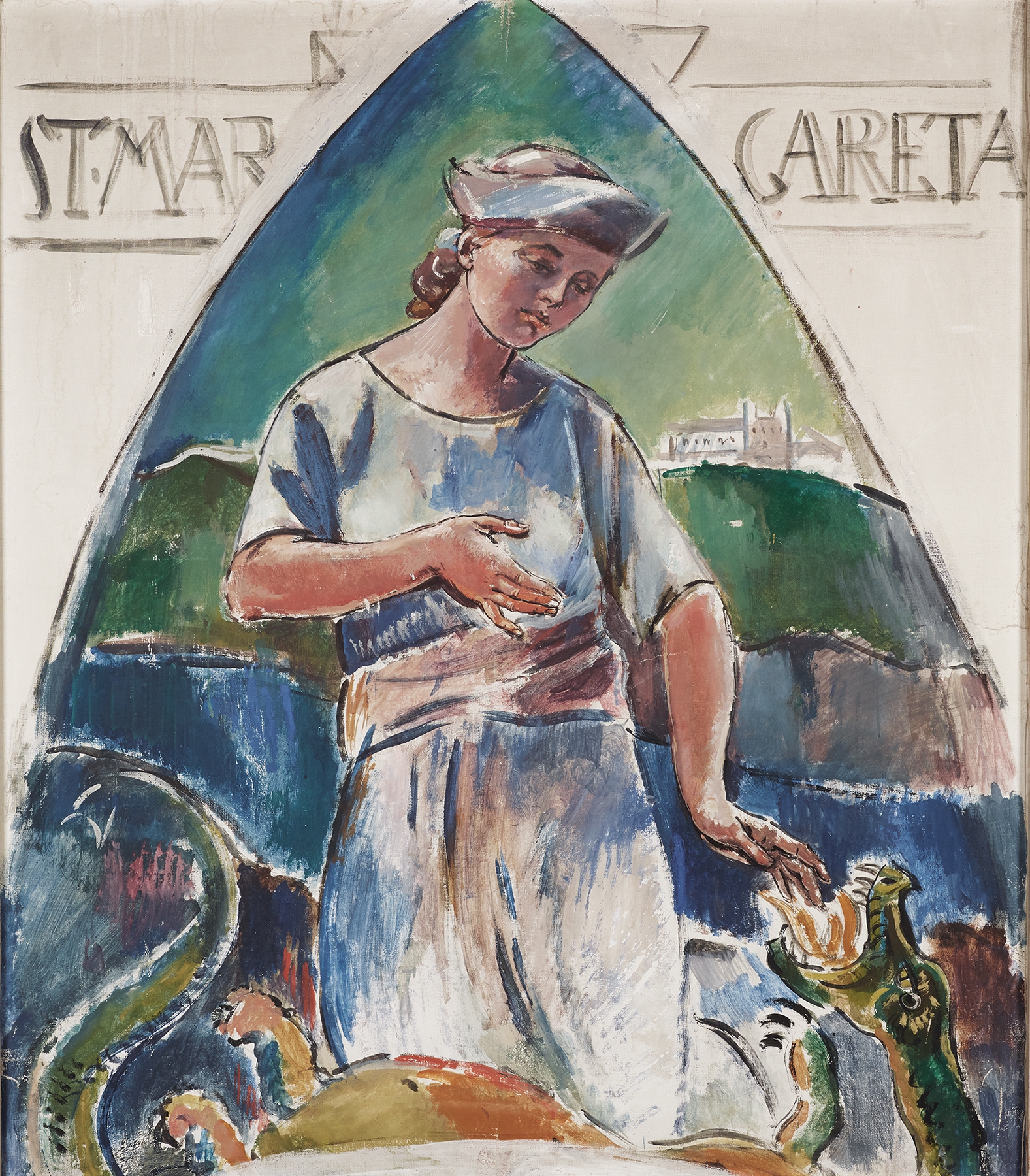 Anton Faistauer | Hl. Margareta (für Pfarrkirche Morzg) | 1923 © Leopold Museum, Wien, Inv. 620
We next turn to Anton Faistauer’s (1887–1930) Saint Margaret, a design for a church fresco. Strictly speaking, this is something of an aside, as Margaret does not appear in the Bible at all but only emerges later in medieval hagiography. Nevertheless, she integrates beautifully into this distinguished circle of heroines: refusing an arranged marriage, she is locked in a tower by her father and, through her unwavering faith, defeats the dragon residing there. Margaret’s story can serve as encouragement not to accept everything passively, but to confront life’s challenges with determination and optimism.
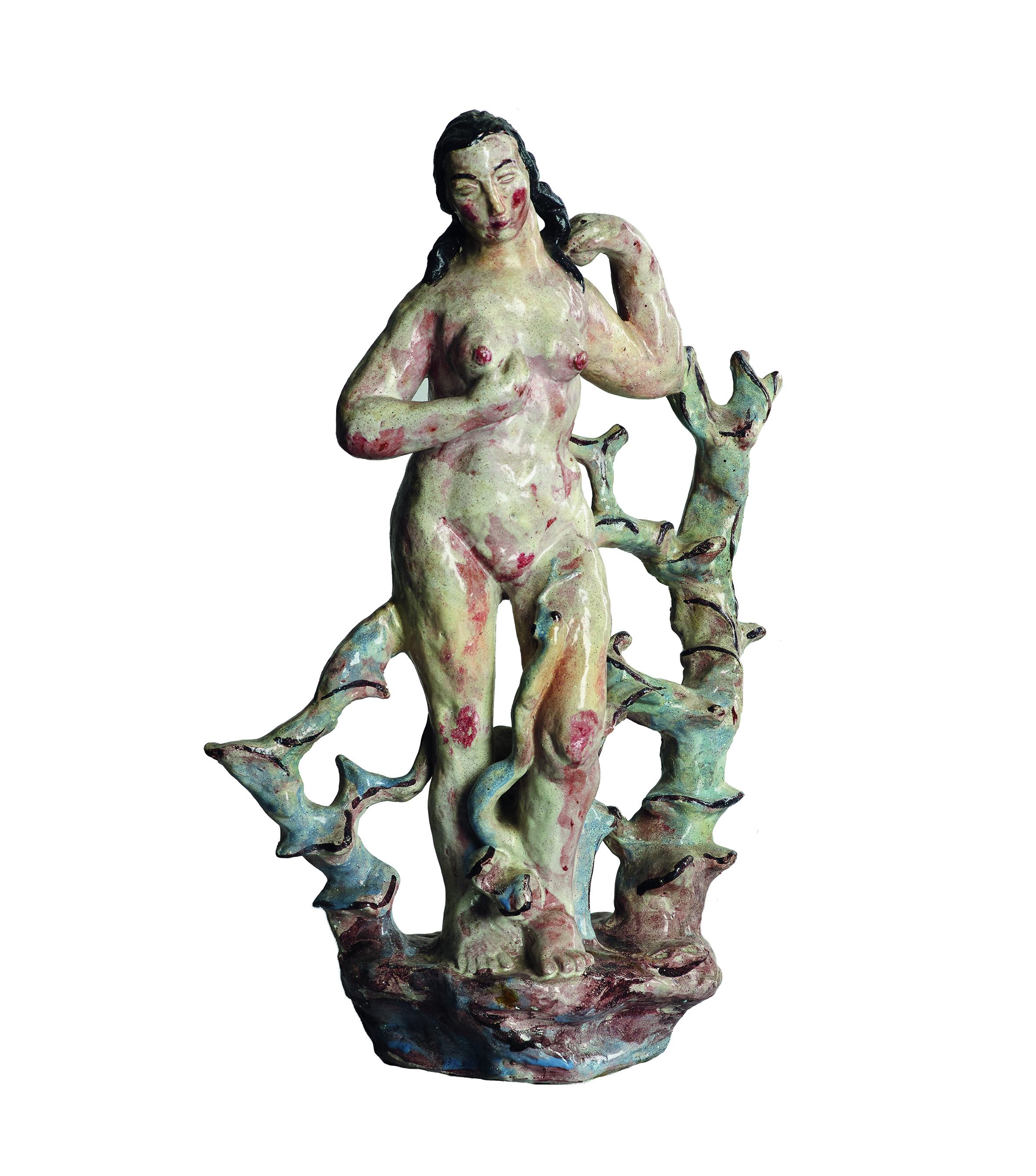
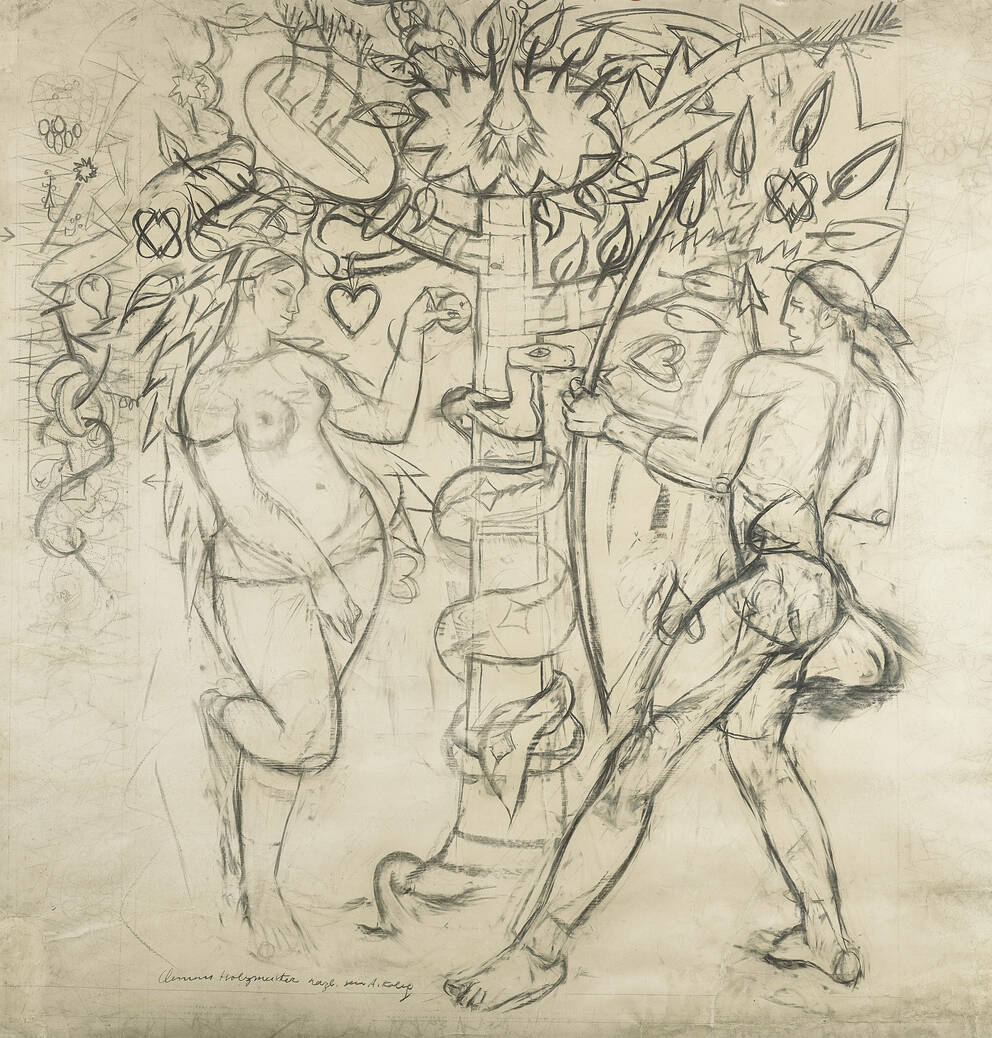
Finally, we consider the woman with whom everything begins in the Old Testament: Eve. Around 1920, the artist and artisan Ella Max (1897–?) designed the ceramic Eve with Serpent, executed by the Wiener Werkstätte. Remarkably modern in appearance, Eve presents herself confidently in her nakedness, surrounded by lush branches. Her skin, shimmering in beige and rosé tones, together with the sensuous curves of her body, accentuates her femininity. The serpent winds elegantly up her right thigh. Observing the work, one may feel that – unlike the familiar biblical narrative – the outcome here remains open. We are not confronted with a sinner, but with a self-determined woman in search of knowledge.
Modern art, too, offers countless biblical motifs. Its heroines – their stories rich in dramatic power and meaning – lend themselves perfectly to visual narratives with a contemporary twist. In this way, Judit and others can serve as role models even today, far beyond questions of faith. At least when it comes to their convictions. For some of their actions – Judit comes to mind – the usual caveat applies: not to be tried at home!
Article by Sophie Touzé