
Gustav Klimt (1862–1918), „Altar des Dionysos“, 1886, Entwurf für das Deckengemälde im südlichen Stiegenhaus (Giebelfeld) des Burgtheaters, (Detail) Öl auf Leinwand, 32 x 158 cm © Dorotheum, 2020.
Viennese Stories – The Leopold Museum Blog
Splendour, Pomp
and Theatricality
The Vienna Ringstraße
Everything has turned out very beautiful – the building is as lovely as its layout is practical.
Emperor Franz Joseph I, 17 October 1891
These words, spoken by Emperor Franz Joseph I on 17 October 1891 at the opening of the Kunsthistorisches Museum, apply equally to the other monumental edifices along the Ringstrasse.
For as aesthetically captivating as this magnificent boulevard may be, its original conception was founded upon practical considerations: the inner city had grown too small for Vienna’s rapidly expanding population and was to be connected with the then-outlying suburbs.
The starting signal for this colossal urban project was given in 1857 with the imperial decree to dismantle the medieval city walls; by 1910, the Ringstrasse was fully completed. The prevailing style of the period was Historicism, and thus buildings of the most diverse appearances arose – yet all followed a common guiding principle: they had to be splendid.
Not everyone, however, was delighted by what emerged. The first building to be completed on the Ringstrasse, the Opera House, was mockingly dubbed by contemporaries a “sunken box.”
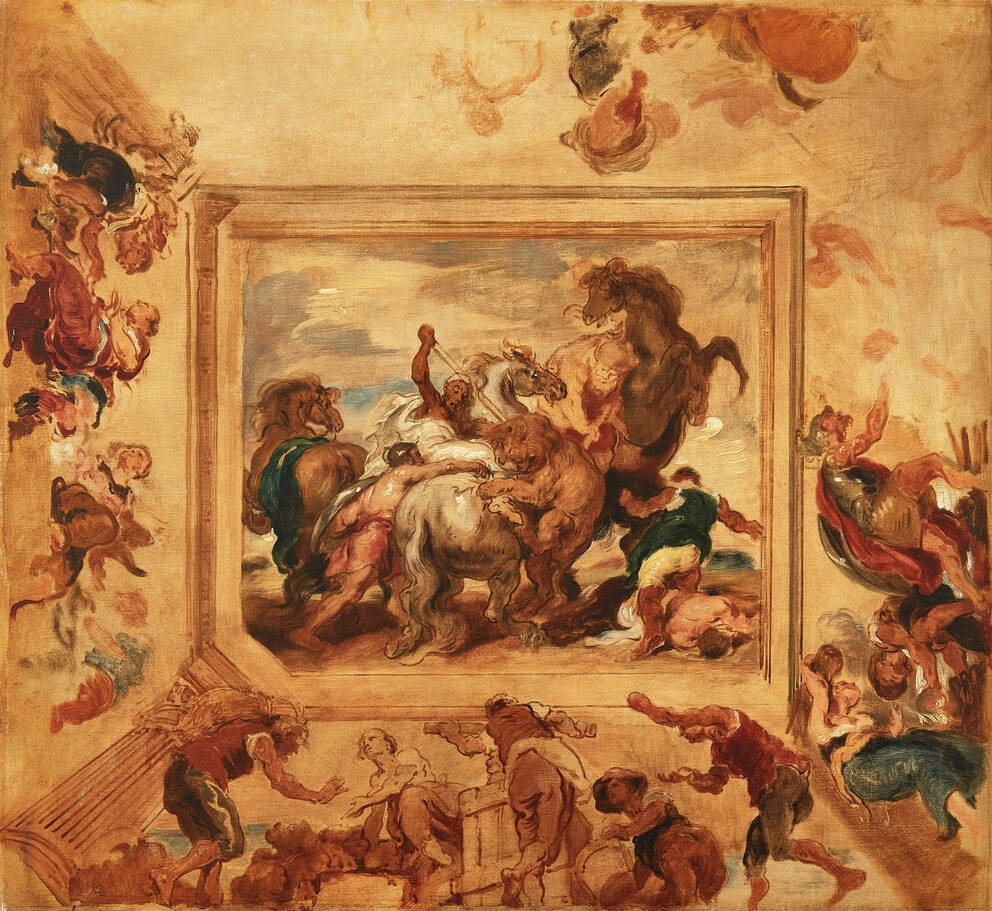
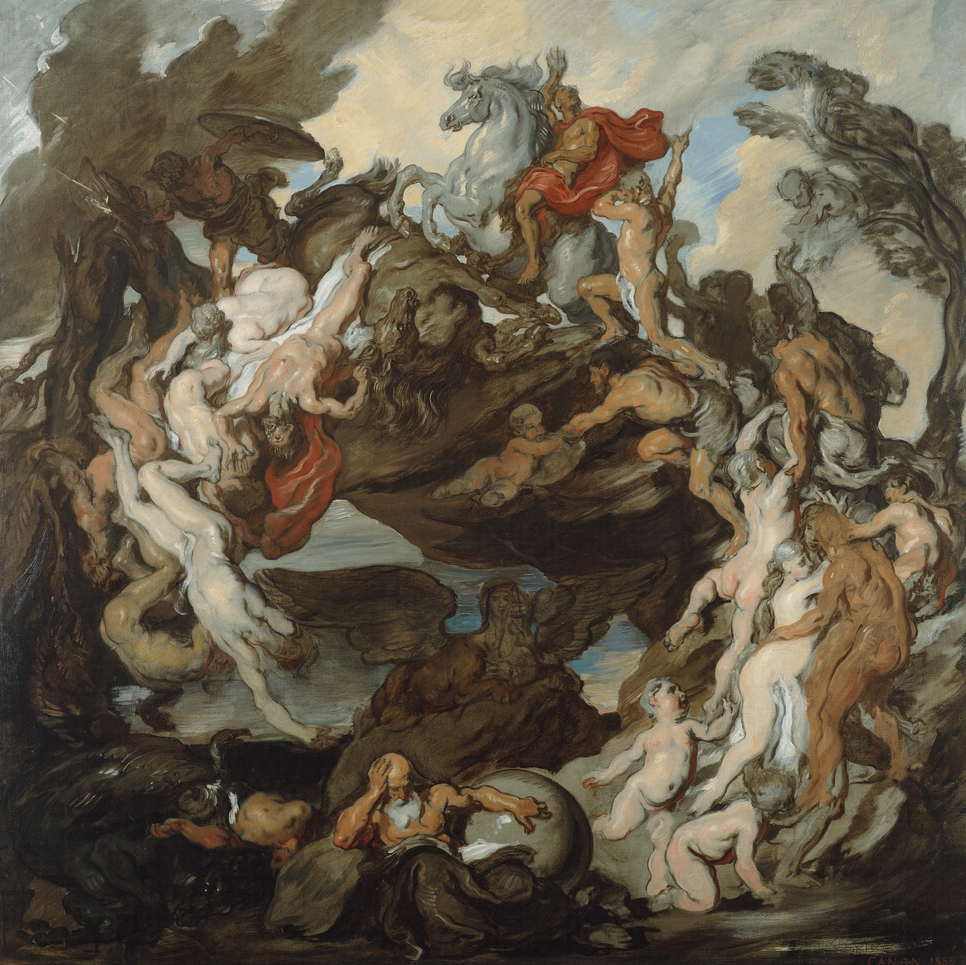
Once the most renowned architects of the era—among them Theophil Hansen, Gottfried Semper, and Carl Hasenauer—had been enlisted for the Ringstrasse project, the many new edifices naturally demanded lavish artistic decoration. The Emperor was only too happy to commission established painters for these tasks: among them were Hans Makart, Hans Canon, and the brothers Gustav and Ernst Klimt.
From 1883 onward, Hans Canon began working on his first concept for the grand staircase of the Natural History Museum – a depiction of The Lion Hunt. The design, however, was rejected, and in 1885 Canon embarked instead on The Cycle of Life. Leaning against a sphere—symbol throughout the ages of Earth, cosmos, or infinity – a philosopher at the lower edge of the composition ponders the meaning of existence. Above him, the Sphinx presides as guardian of the secret of time. The cycle itself narrates essential stages of human existence: defeat and triumph, striving and falling, love and death. Canon’s work was installed in the museum’s staircase only after his death.
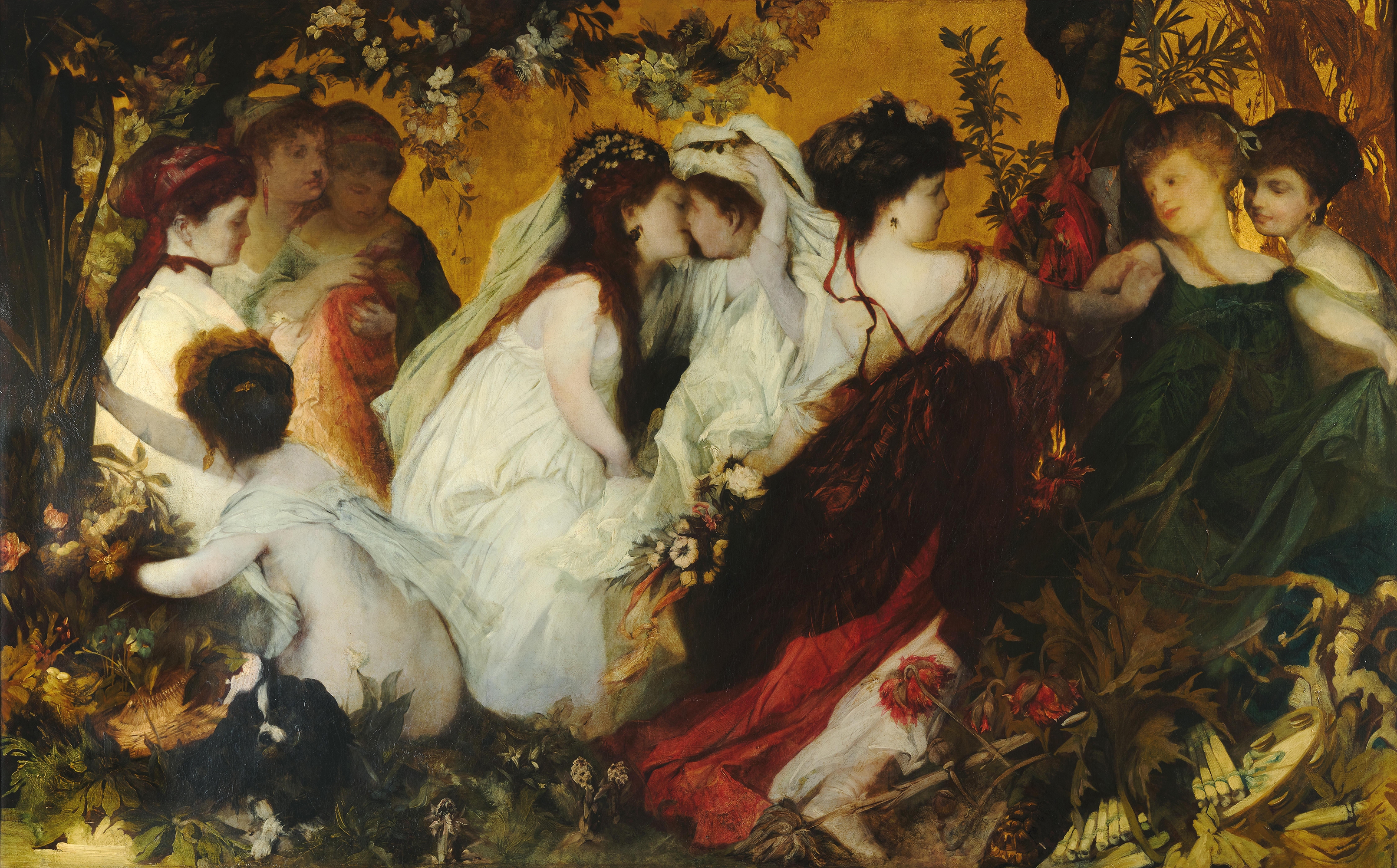
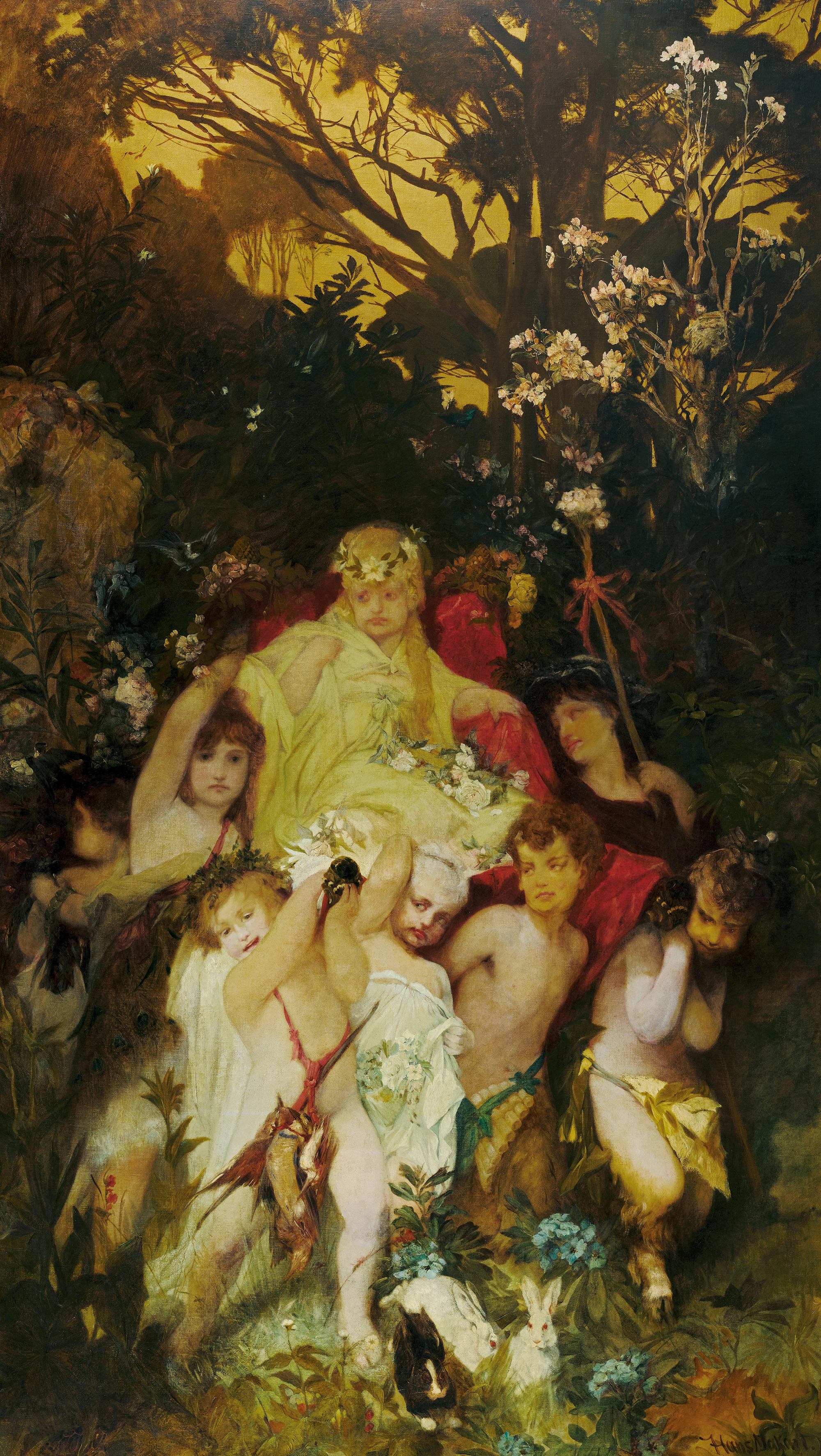
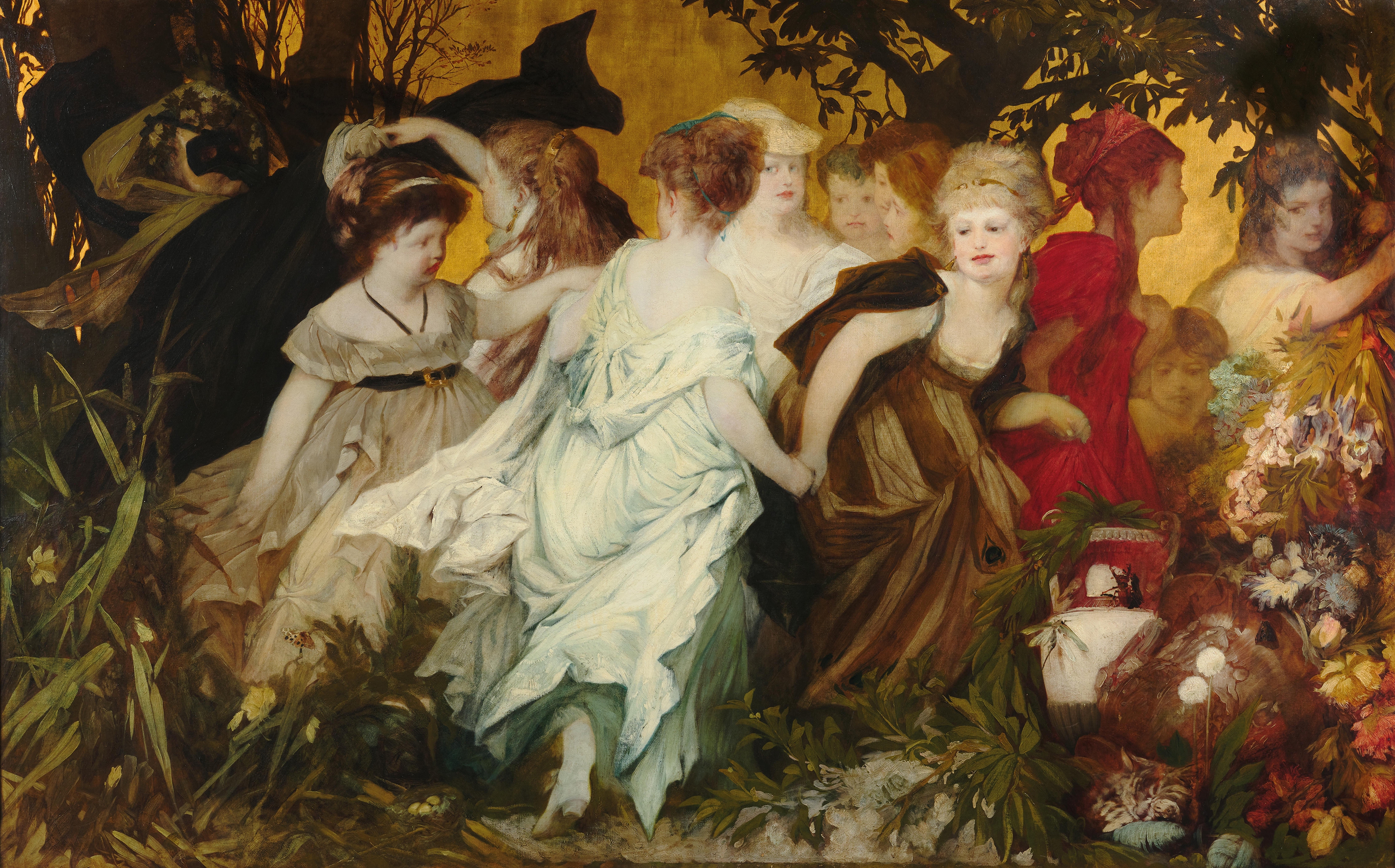
Hans Makart’s Modern Cupids from 1868, a triptych, was likewise conceived for architectural integration. The three-part painting depicts a festivity in an enchanted woodland setting; mythological beings revel, dance, and kiss. The “modern” aspect of the work, emphasized in its very title, provoked a scandal that would make Makart famous: the outwardly prudish bourgeois society of the time was unaccustomed to seeing cupids – those familiar companions of the god of love, Amor – portrayed as adolescent figures exploring their own sensuality.
Gustav Klimt, too, benefited from the Ringstrasse project. For one of the gable panels of the two grand staircases in the Burgtheater, he painted The Altar of Dionysus. The corresponding design, dated 1886, takes the form of a frieze and reveals in the background a perspective view of a temple architecture. In the centre rises a bust of Dionysus, enthroned upon a pedestal. This cult statue is crowned with a golden laurel wreath by the god’s attendants, the Maenads. The Greek god of wine – renowned for his passion for ecstatic celebration – has long been associated with the theatre, and to this day the Theatre of Dionysus in Athens is regarded as the first theatre in the world.
Gustav Klimt, Altar des Dionysos, 1886 © Öl auf Leinwand, 32 × 158 cm, Leopold Museum, Wien, Schenkung aus Wiener Privatbesitz, Foto: Leopold Museum, Wien/Manfred Thumberger
Thus, the decorations of the Ringstrasse buildings share two defining characteristics: they are unparalleled in splendour, and they reflect the very essence of the institution they adorn, be it art, theatre, or natural science. Yet just as beautiful as the completed paintings that still grace the Ringstrasse architecture are the preparatory sketches and designs that preceded them. These bear witness to the creative will and imaginative spirit of their makers.
And there is one more advantage: their study can be enjoyed in comfort – without the neck strain that comes from gazing endlessly upward at the ceiling.
Article by Sophie Touzé