
GUSTAV KLIMT, Ver Sacrum. Theseus and Minotaur. Poster for the 1st Exhibition of the Vienna Secession (Version Prior to Censorship), 1898 © Leopold Museum, Vienna
The Leopold Museum Blog
Uncovered
The Nude in Art History
and the Leopold Collection
Do you still remember "L’Origine du Monde", the best-known artwork from our spring 2026 exhibition on "GUSTAVE COURBET. Realist and Rebel"? With its radically candid depiction of female genitalia, this nineteenth-century painting continues to provoke many viewers even today. Yet nudity has always been a constant presence in art.
Even idols, small figurines from prehistory, were usually depicted nude. Consider the world-famous Venus of Willendorf, whose nudity, together with her ample forms, symbolizes fertility. Later, in Egyptian art, nudity was used in an entirely opposite way: alongside deities, laborers and enslaved people were also depicted nude to signal their lower social status.
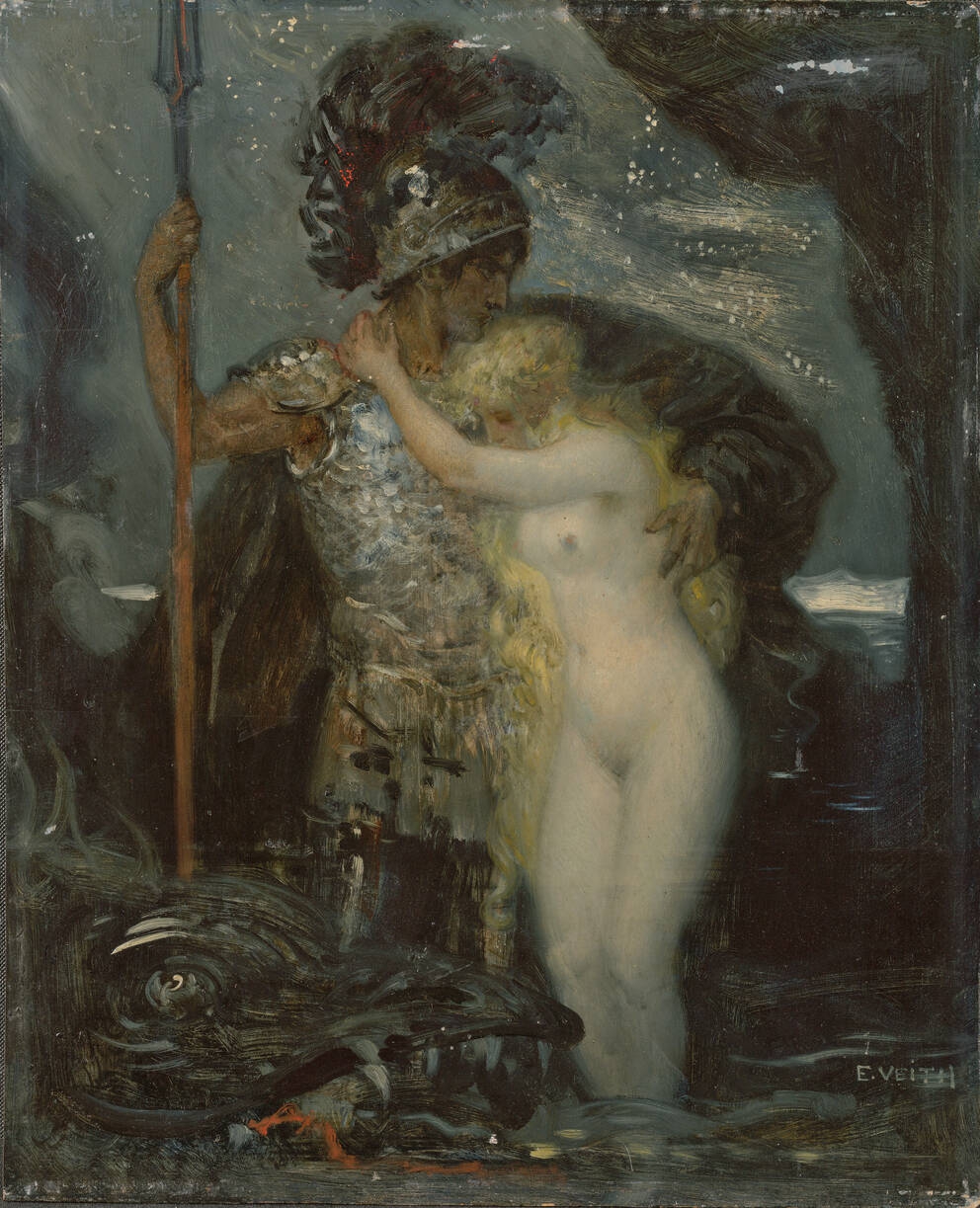
In ancient Greece, too, “respectable” citizens would probably not have chosen to be portrayed nude. By contrast, deities such as Aphrodite and Eros, as well as idealized heroes and athletes, were depicted nude, partially nude, or clothed only in sheer fabrics. This is also evident in Gustav Klimt’s (1862–1918) Theseus and Minotaur. Poster for the 1st Exhibition of the Vienna Secession: both Theseus and his rival are depicted nude in the midst of combat. In Eduard Veith’s (1856–1925) Perseus and Andromeda, another representation of an ancient myth, it is the female figure who is portrayed nude as the object of male desire.
Nudity thus became an aesthetic principle in art, accepted and even celebrated, as long as it was “justified” by a mythological subject, an allegorical idea, or some other symbolic meaning. When artists departed from this convention or from that of the academic ideal of the human body, they could quickly provoke a major scandal.
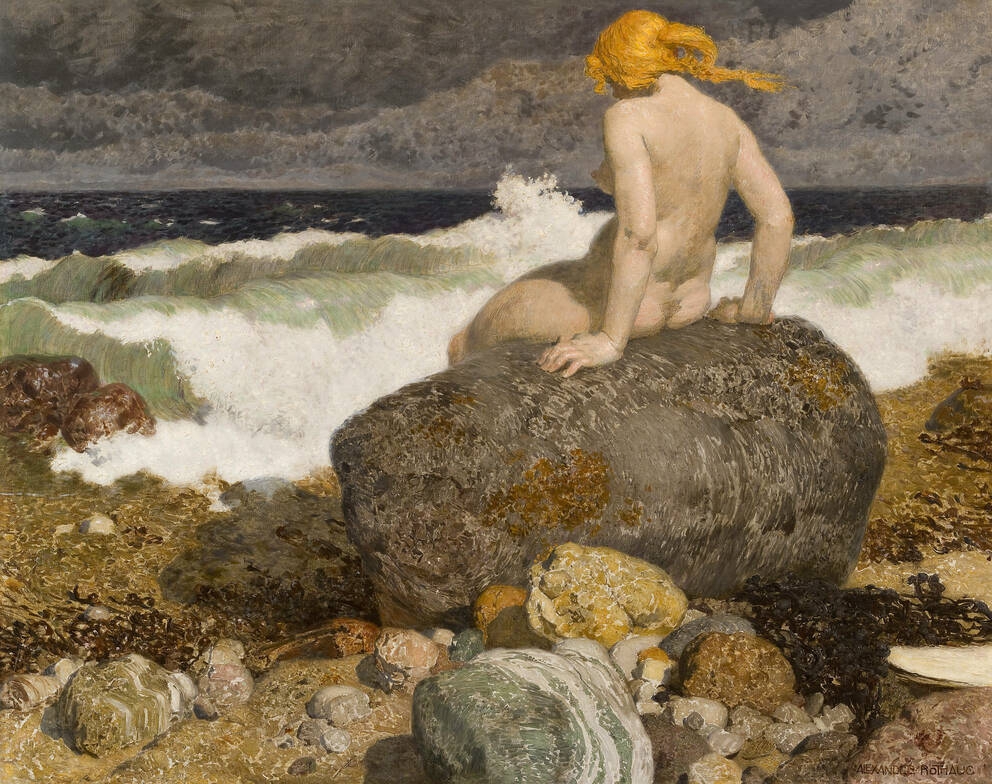
Let us turn to further examples from the Leopold Collection. Mythologically inspired nudity can be found, for example, in the work of Alexander Rothaug (1870–1946). The painting On a Northern Beach depicts a nude woman seen from behind, who may represent Hans Christian Andersen’s (1805–1875) Little Mermaid from the fairy tale of the same name. The interplay of its fairy-tale atmosphere, the figure’s nudity, and her introspective, withdrawn pose lends the painting an enigmatic yet alluring quality.
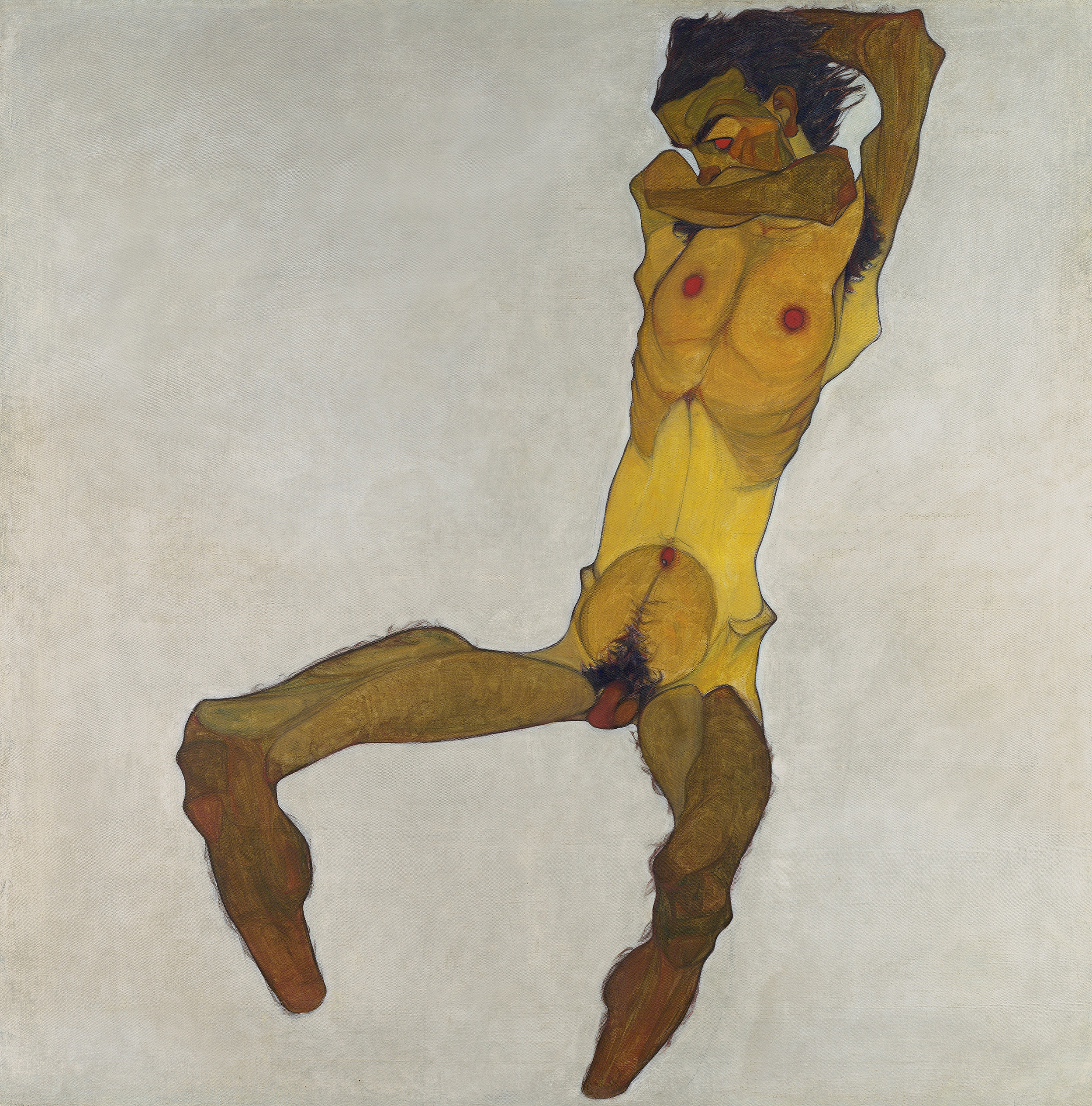
Egon Schiele’s (1890–1918) art is deeply concerned with his own image. While self-portraits have a long tradition in art, portraying oneself nude was still considered scandalous in 1910. In Seated Male Nude, Schiele was likely seeking to externalize his psyche through painting. The nude body, fragmented, emaciated, and sickly, becomes a mirror of a fractured self.
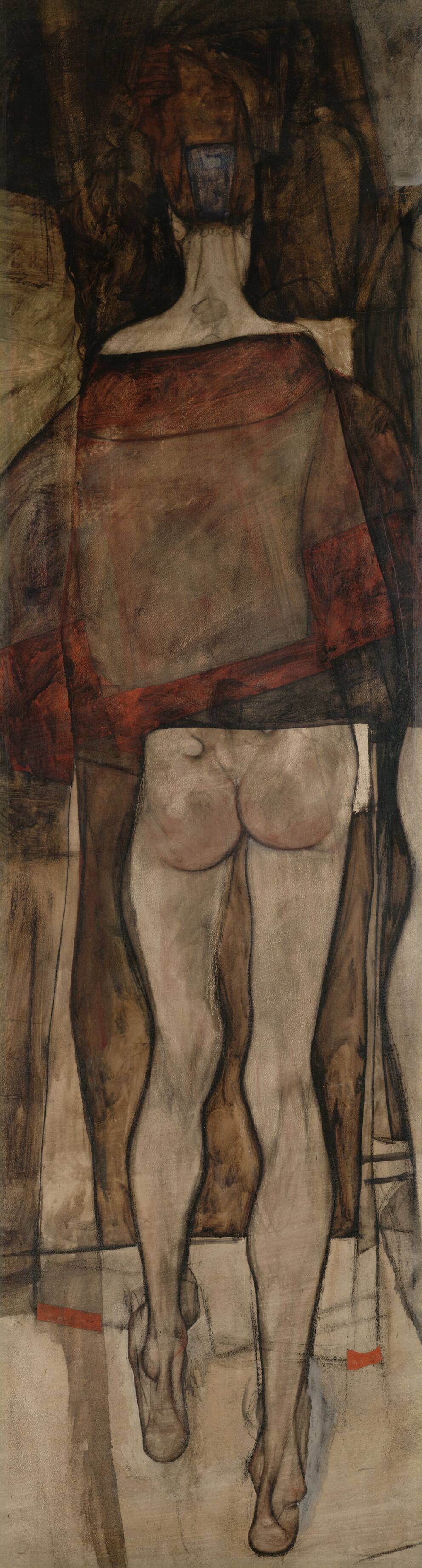
Schiele also seems to have been interested in the charged interplay between states of dress and undress, between the textile surface and the flesh. This can be seen, for example, in a fragment of Conversion II from 1913, which depicts a figure viewed from behind, with a cloak draped around the upper body while the buttocks remain exposed.
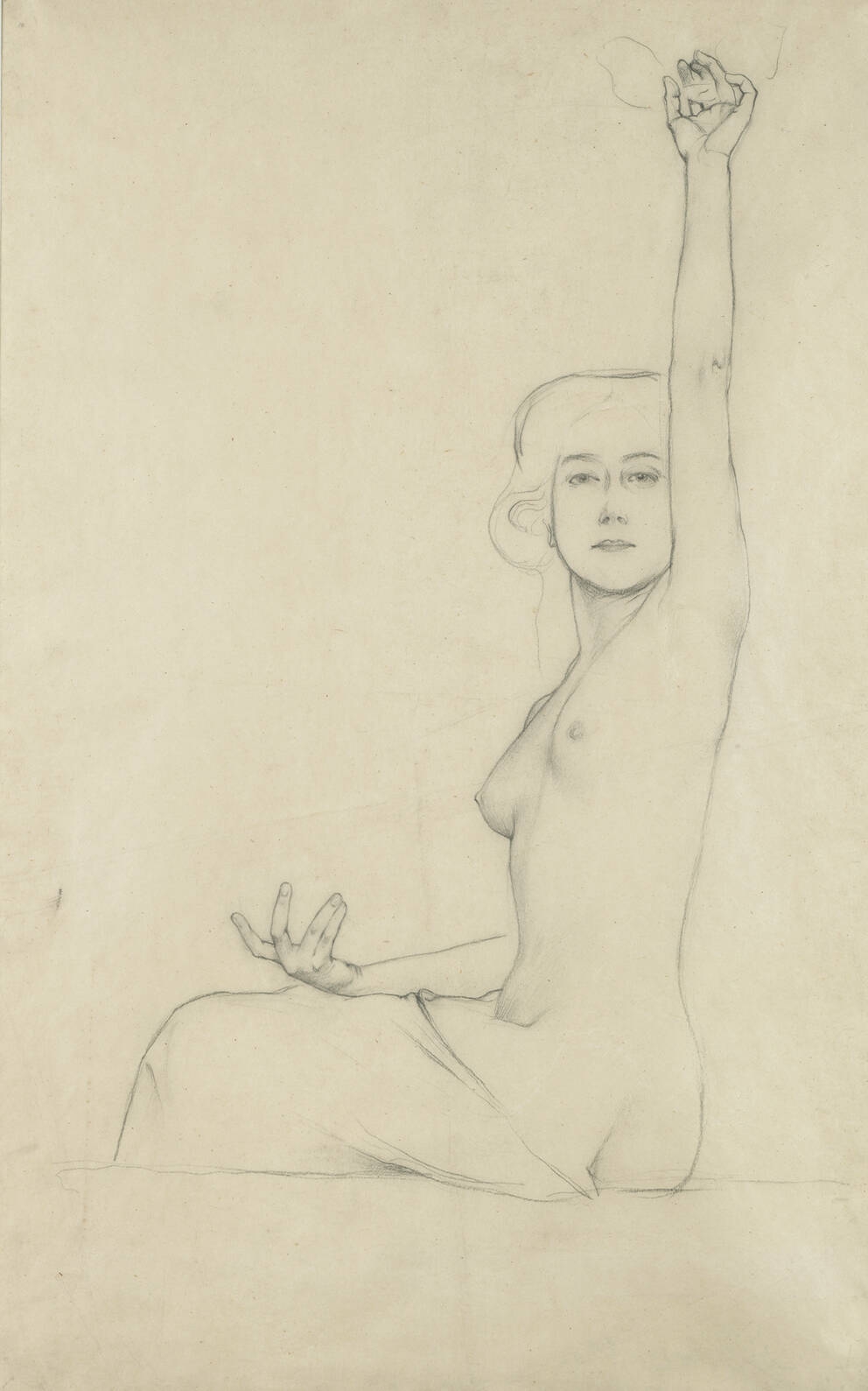
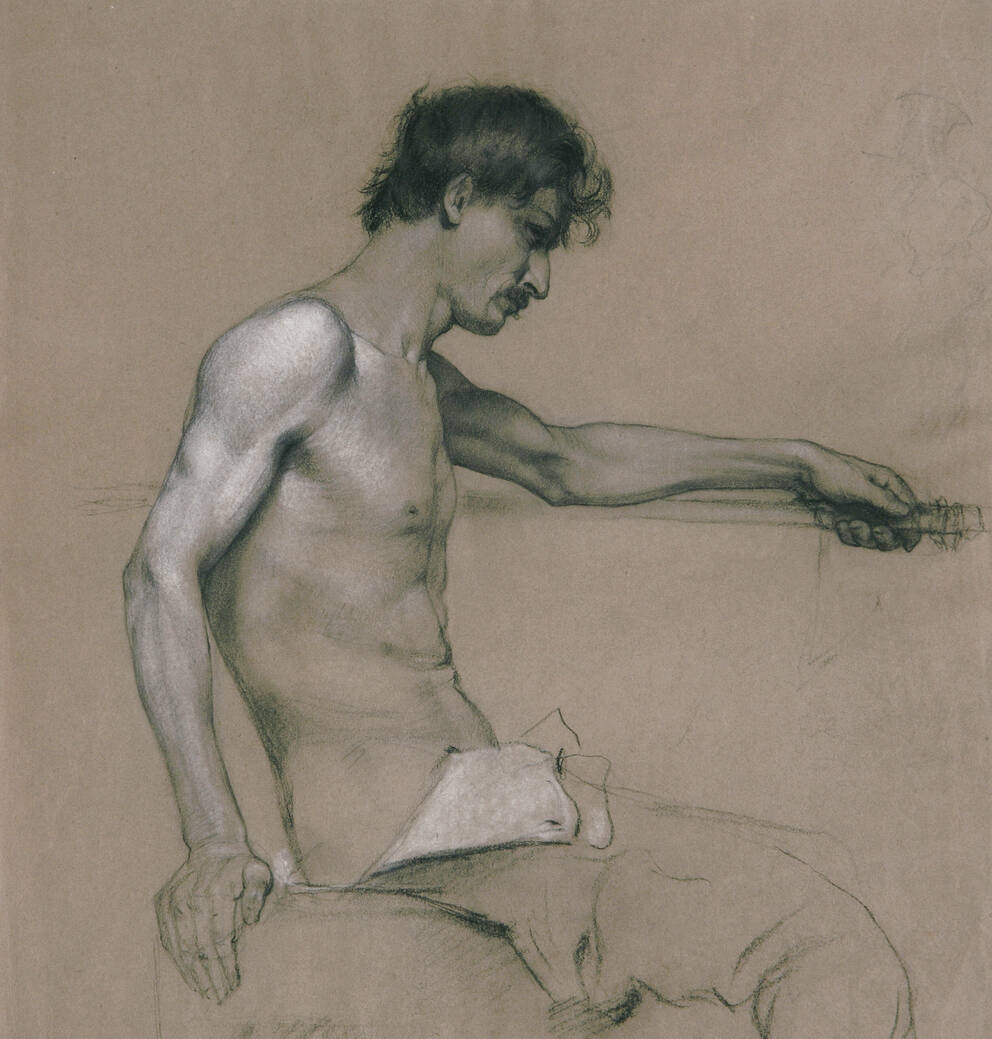
Koloman Moser (1868–1918) explores the theme of nudity in strikingly different ways within his own oeuvre, depending on the gender of the figure depicted. Many of his male nudes possess a seductive quality, such as the one from the late 1880s with slightly lowered trousers and elegantly defined, slender abdominal muscles. Moser’s sketch for the Allegory of Painting, a female nude, lacks that provocative character despite a similar state of partial undress. Here, nudity is not erotically charged; rather, it serves the realm of the sublime and the grand.
Finally, the female gaze on nudity deserves attention: Helene Funke (1869–1957) created a series of nude studies around 1908–10. In her Female Nude Reclining, Funke depicts a woman who appears to be absorbed in her own world, yet at the same time confronts the viewer’s voyeuristic gaze with her own direct stare. She is neither an idealized image nor a model of physical perfection, but rather an unidealized portrayal of a woman with wide hips, a rounded belly, and sturdy thighs.
Artists have always engaged with nudity in diverse ways. Representations of the nude provide insights into symbolic meanings and social structures, ideals of beauty, and gender roles. Heinrich Heine (1797–1856), incidentally, offered a sympathetic and perceptive observation on the subject: “When we really think about it, we are all naked beneath our clothes.”
Article by Sophie Touzé
TO ONLINE COLLECTION
TO LEOPOLD MUSEUM BLOG
HELENE FUNKE, Female Nude reclining, 1908/10 © Leopold Museum, Vienna