
GUSTAVE COURBET, The Man with a Pipe, c. 1849 © Musée Fabre, Montpellier Méditerranée Métropole | Photo: Musée Fabre de Montpellier Méditerranée Métropole/Frédéric Jaulmes
19.02.2026-21.06.2026
GUSTAVE COURBET
Realist and Rebel
The large-scale retrospective at the Leopold Museum is the first solo exhibition dedicated to Gustave Courbet in Austria, featuring works from all periods of the artist’s oeuvre and affording a comprehensive overview of his painterly and graphic work. Courbet is considered the most eminent exponent of realism, who boldly defied the idealizing conventions of 19th-century art. His self-confident demeanor, the importance he placed on artistic autonomy, his penchant for provocation and his revolutionary style of painting made him famous throughout France and beyond. Courbet skillfully exploited the perception the public had of him, and fostered his image as a rebel of the art scene. At the same time, the “dreamer” Courbet showed a quiet, contemplative world in his portraits, landscapes and still lifes, which appears in contrast to the rapid political and industrial changes of his time.
This exhibition has been placed under the honorary patronage of Alexander Van der Bellen, the Federal President of the Republic of Austria, as well as the high patronage of the President of the French Republic Emmanuel Macron and the President of the Federal Republic of Germany Frank-Walter Steinmeier.
Curators: Niklaus Manuel Güdel, Hans-Peter Wipplinger
Research Associate: Anne-Sophie Poirot
Assistent Curator und Project Coordinator: Lili-Vienne Debus
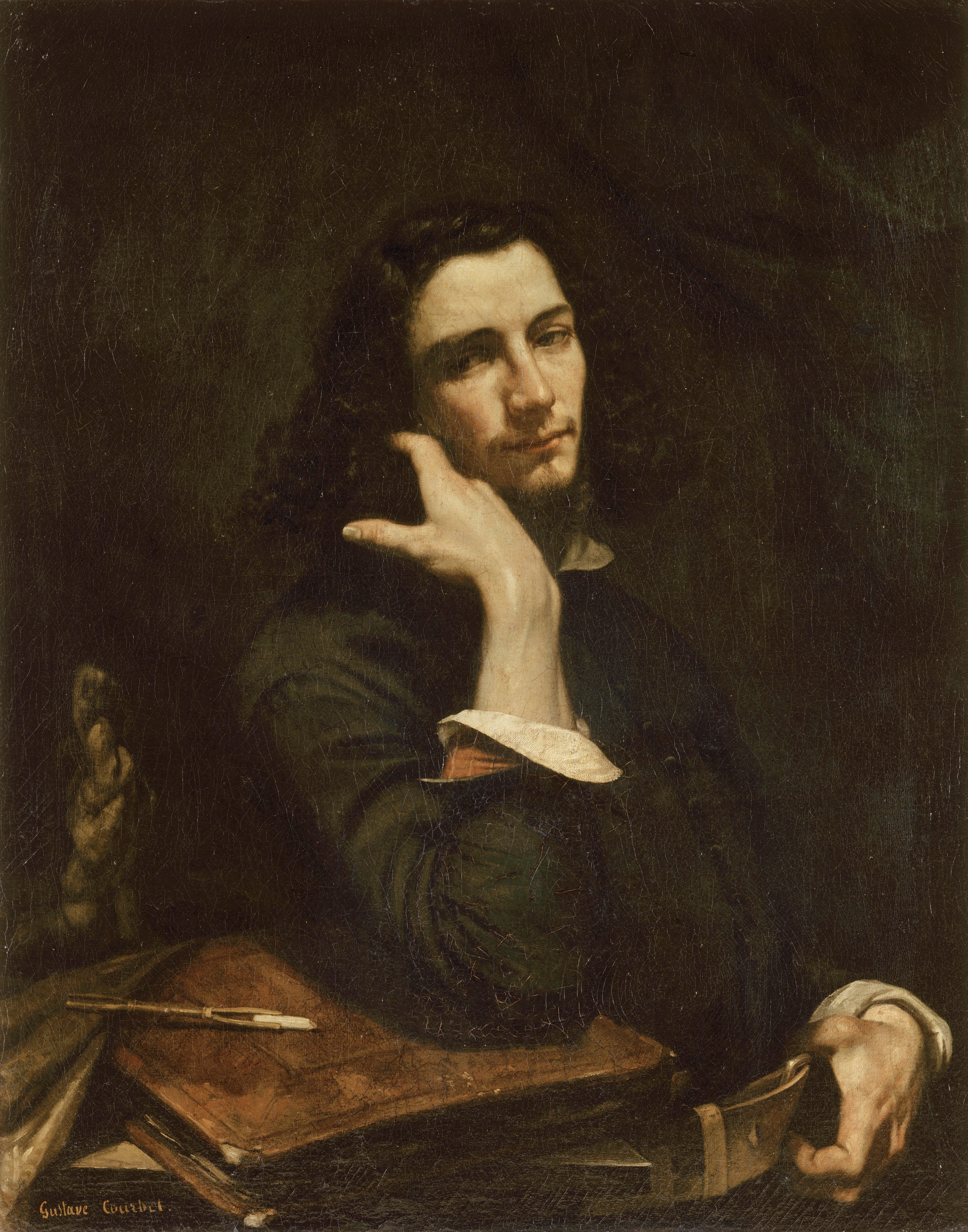
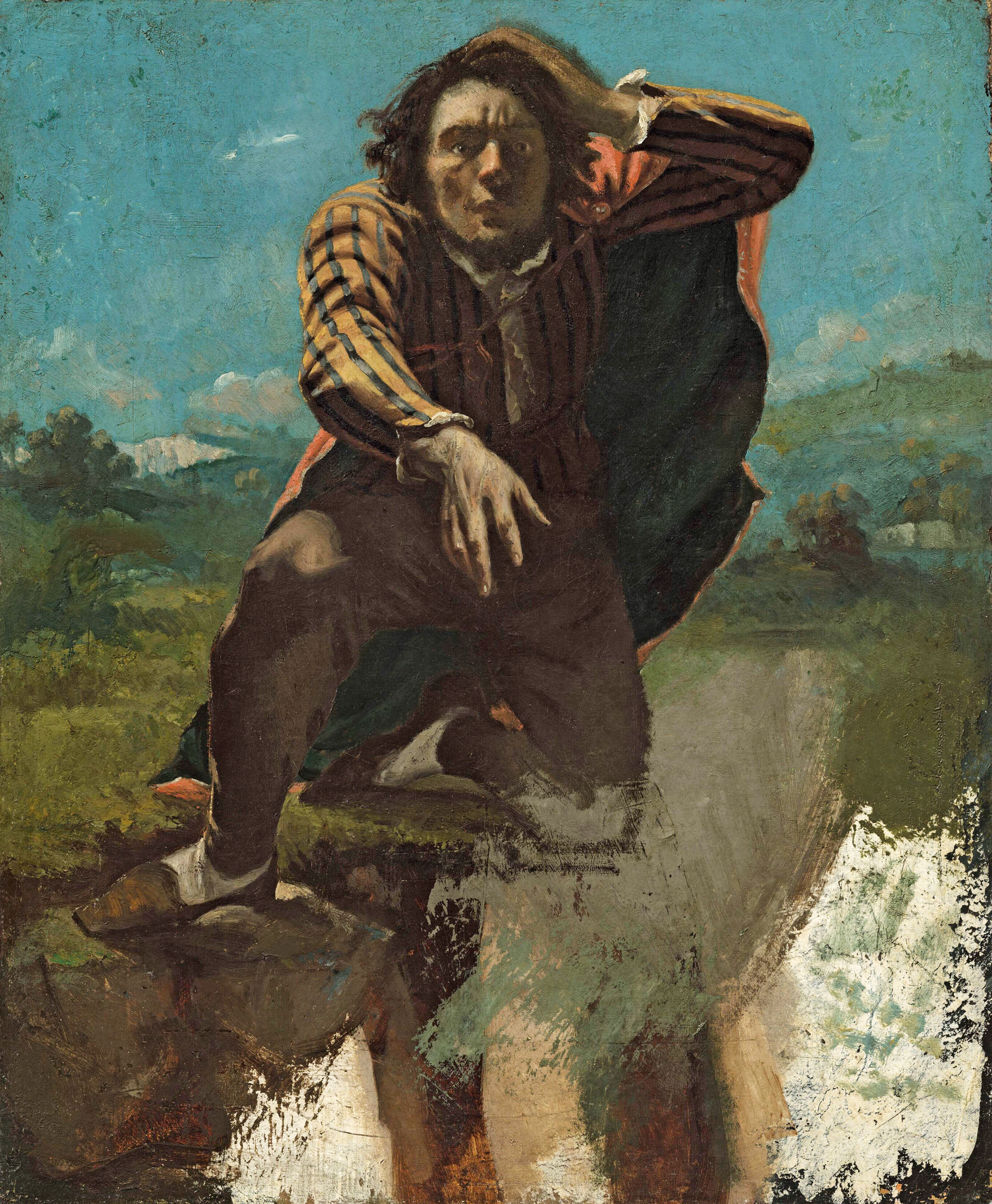
Courbet used self-portraits, especially in his early oeuvre of the 1840s, as an experimental field for his realism, and as an opportunity to render human emotions. Rather than as an impersonal observer, he staged himself as a protagonist of various mental states: at times confident and strong, at others desperate, embittered or melancholy.
In the approximately 50 self-portraits he created throughout his lifetime, the artist cast himself in highly different roles and moods, occasionally accompanied by theatrical gestures and facial expressions. The spectrum of his identity changes ranges from a suffering, introverted wounded man to someone mad with fear, and from a melancholy dreamer to an empathetic cello player or pipe-smoking loner. Accusations of narcissism did not irk him at all; instead, he welcomed being a popular target of caricaturists, as this ultimately served to increase his celebrity and market value.
"I have done a good many self-portraits in my life, as my attitude gradually changed. One could say that I have written my autobiography."
Gustave Courbet, 1854
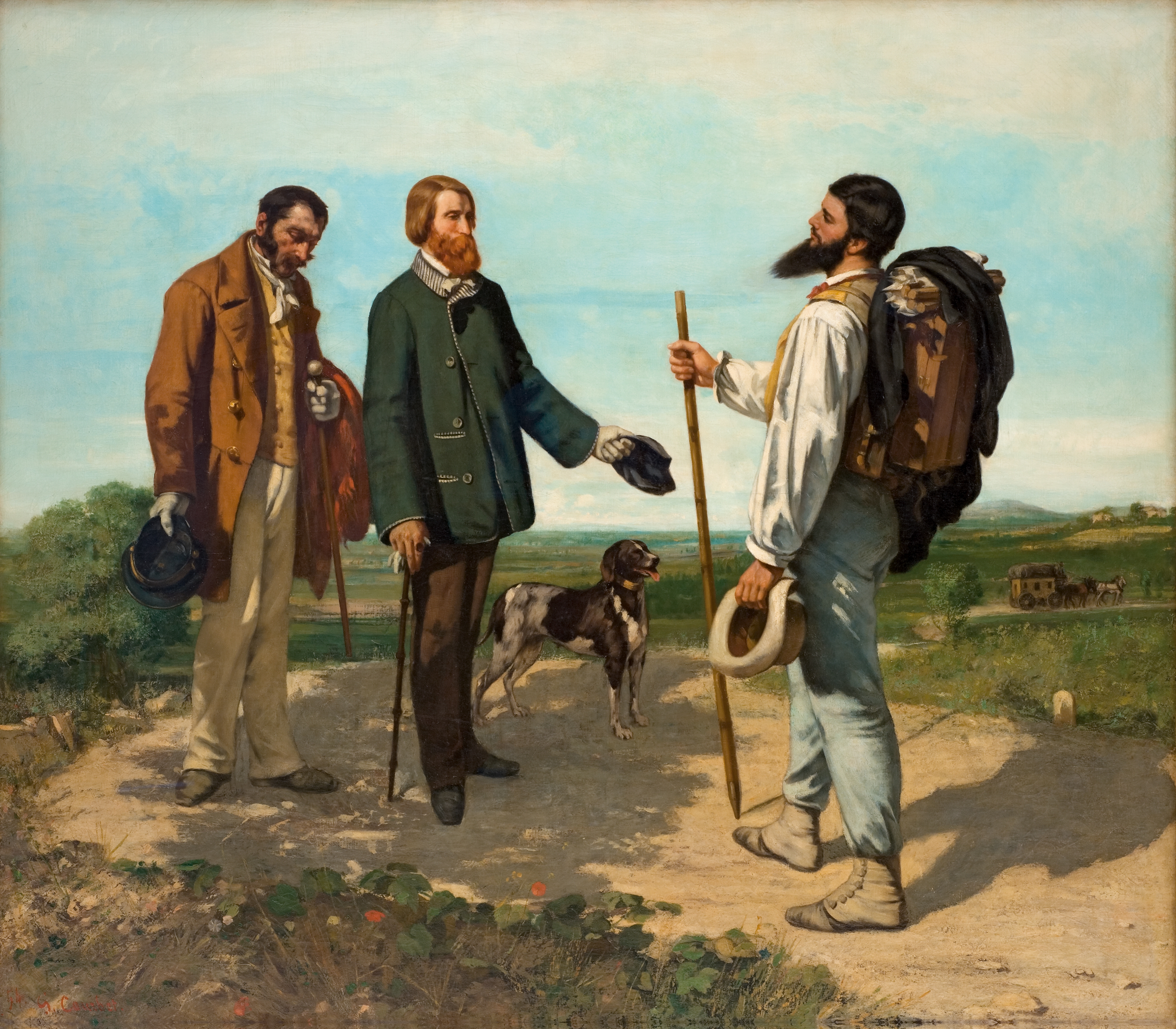 GUSTAVE COURBET, The Meeting or Bonjour Monsieur Courbet, 1854 © Musée Fabre, Montpellier | Photo: Musée Fabre de Montpellier Méditerranée Métropole/Frédéric Jaulmes
In this masterpiece, Courbet presents himself as a self-confident, free and independent artist who is greeted respectfully by his patron and collector Alfred Bruyas and the latter’s servant. The work is a programmatic image that symbolizes the independence of the artist, who is no longer forced to bow to his collector. On the contrary, the artist is on a more than equal footing with his rich patron; he towers over him and is the only one of the three protagonists to cast a shadow. The painting can therefore be seen as a Realist manifesto and a testament to Courbet’s free spirit: The artist values individualism and freedom above all else, even if it means defying traditional conventions.
GUSTAVE COURBET, After Dinner at Ornans, 1849 © Lille, Palais des Beaux-Arts | Photo: GrandPalaisRmn (PBA, Lille)/Philipp Bernard
Over a period of seven years between 1848 and 1855, Courbet created his ground-breaking socio-critical works, attracting attention as an artist who assumed social responsibility and aimed to imbue art with authenticity. Courbet rejected the academic conventions of his time, and focused on the anti-heroes, the ordinary men and women of everyday life, who he invested with a sense of dignity in his renderings. The viewers – used to idealizing and romanticizing depictions – were somewhat unsettled by the ostensibly mundane scenes of daily life he presented, by his unsparing revelations of social truths and novel esthetical values, which were perceived as unsightly. His role as a pioneer of modern realism, which Courbet secured for himself with this new authenticity, wasn’t recognized until much later.
"In order to paint a country, you have to know it. I know my country, and I paint it."
Gustave Courbet
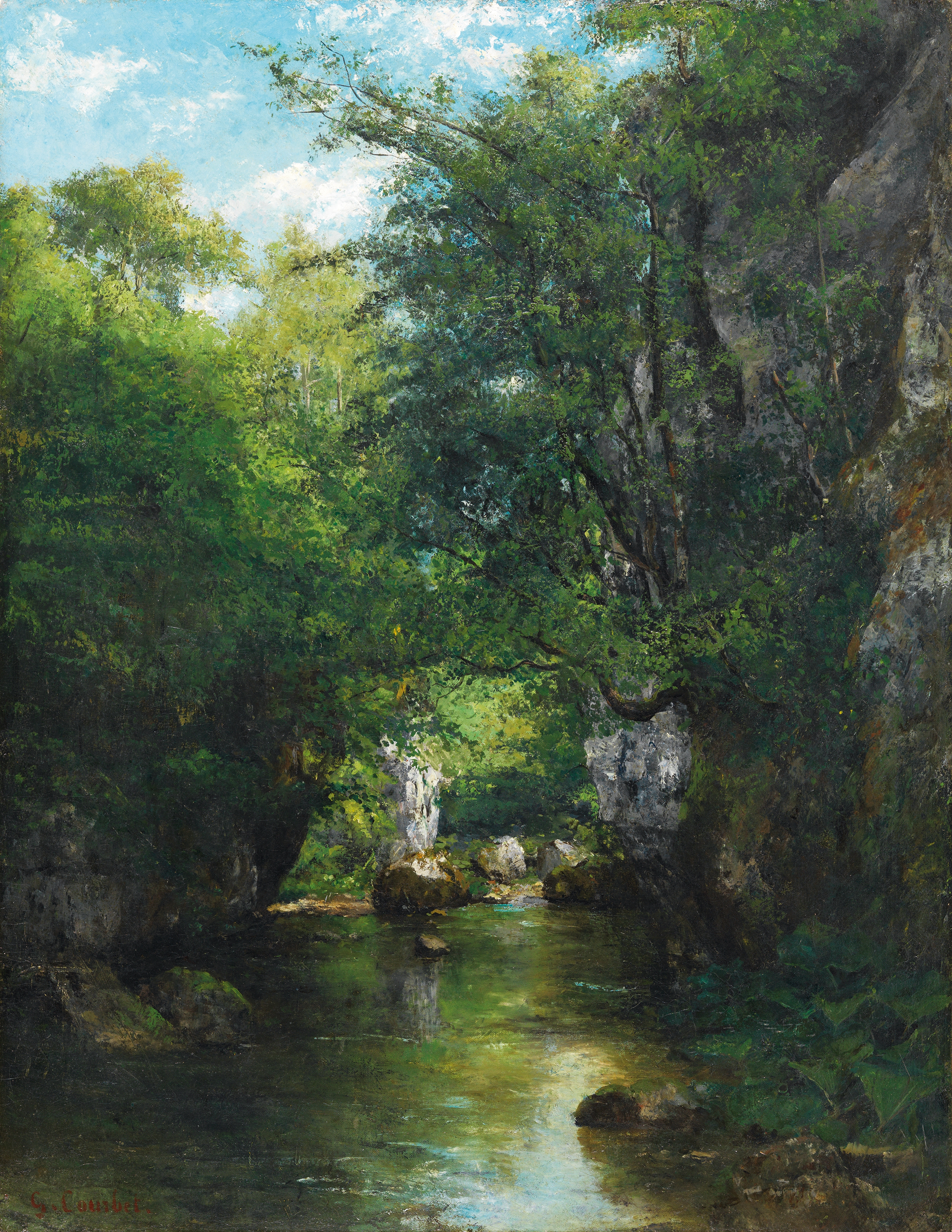
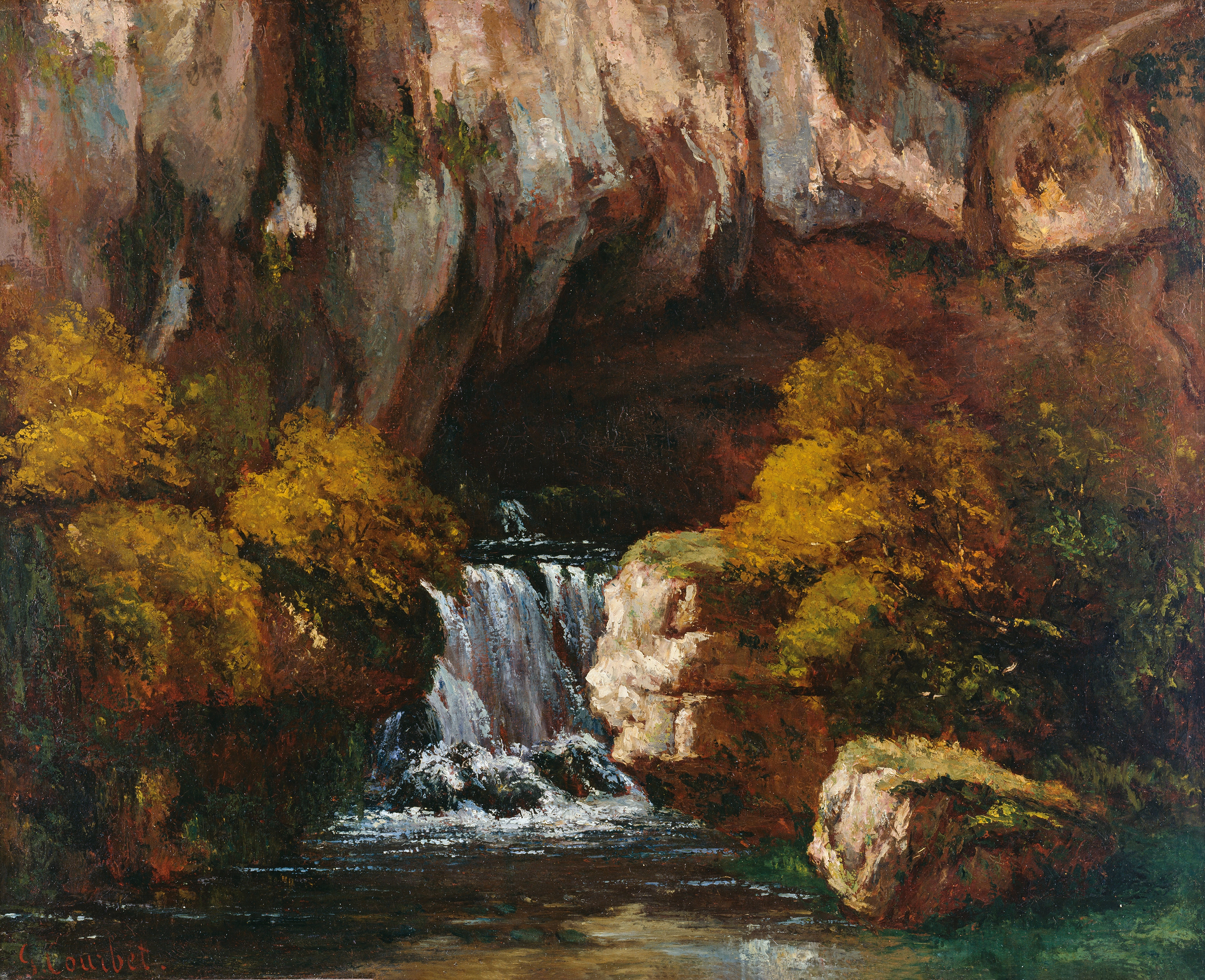
Courbet spent his childhood and adolescence in the Franche-Comté region. This area of distinctive geological features had a formative impact on him and his art. He created around a third of his entire oeuvre here, especially in the environs of his hometown Ornans. Even after he had moved to Paris, he returned nearly every year for several months to his hometown. Whether secluded streams or waterfalls, green valleys or plains, dense forests and rock formations or the mystical sources and grottos shown in further exhibition rooms: Courbet regarded rough nature as a metaphor of unadulterated truth, which represented the prime principle of his art. With this novel approach, Courbet bid farewell to the idealizing landscape painting of the time. Particularly his depictions of springs and rock formations are regarded as groundbreaking for modern painting. Courbet applied the paint in thick layers using a palette knife. With this technically unconventional manner of painting, as well as through the realistic, extremely close-up, and by no means illusionistic rendering of his motifs, he consciously opposed traditional, romanticizing landscape painting.
Never before had sexuality been depicted so directly and without mythological idealisation as in The Origin of the World. Gustave Courbet showed a female body in radical close-up: headless and armless, the unveiled female sex at the centre of the picture. The sensual eroticism of the work unfolds through the depiction of naked skin and is further emphasised by the semi-concealing white sheet. Courbet deliberately created the painting for the private sphere; in the 19th century, a public presentation would have been unthinkable. It was not until 1995 that ‘The Origin of the World’ was presented to the public for the first time.
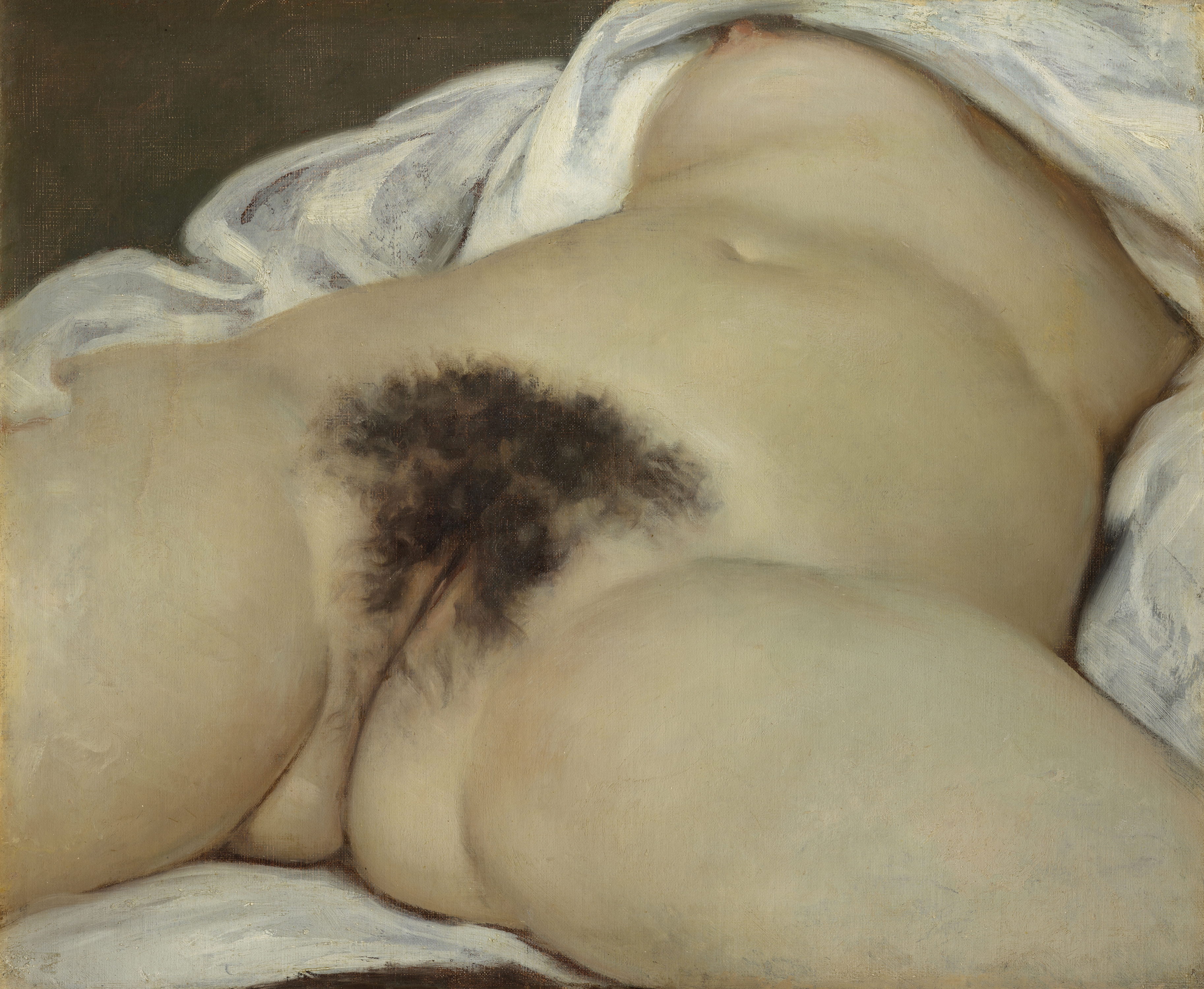 GUSTAVE COURBET, The Origin of the World, 1866 © Musée d’Orsay, Paris | Photo: Grand Palais RMN (Musée d’Orsay)/Hervé Lewandowski
“When I am dead, they must be able to say of me, ‘That one never belonged to any school, to any church, to any institution, to any academy, and, above all, to any regime except the regime of freedom‘.”
Gustave Courbet, 1870
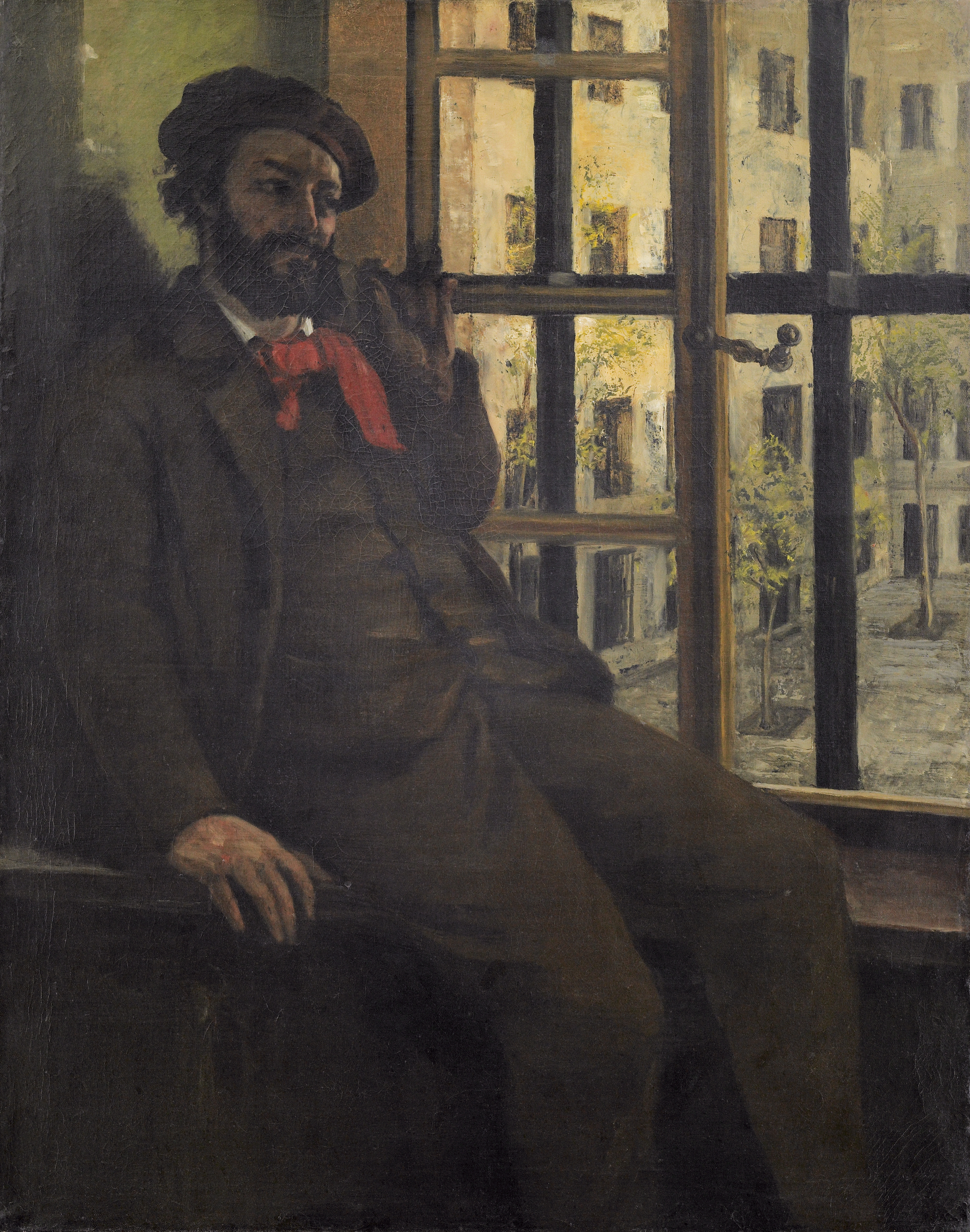
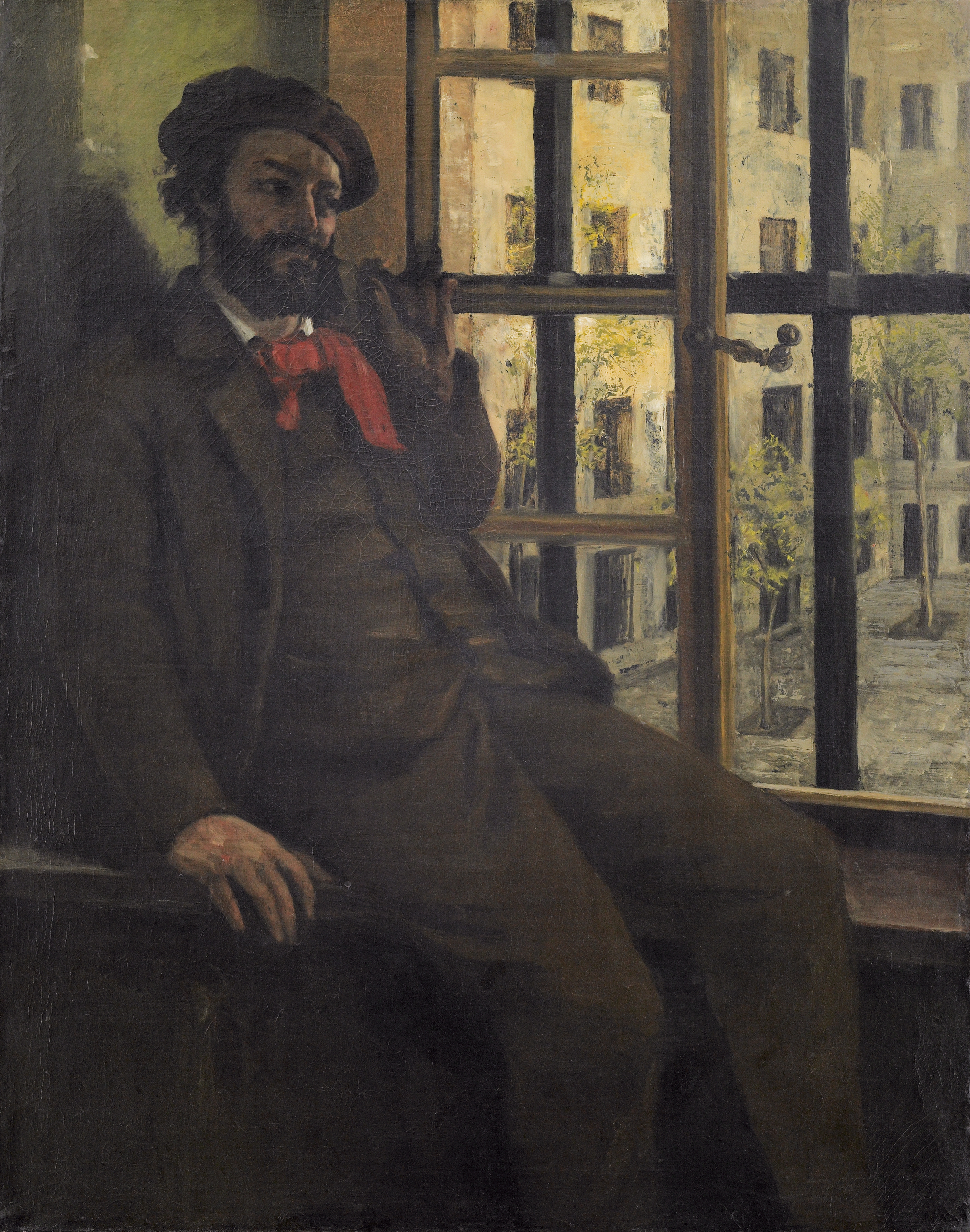
Following the demise of the French Empire in 1870, Courbet made a name for himself as a politician, and became a leading figure in French politics during the Paris Commune in 1871. His political involvement, however, would be his downfall. After the violent crushing of the Commune, he was sentenced to six months in prison and fell into disfavor with the new government. Undeterred, Courbet planned for a large-scale presentation of his works to be shown in the 1873 World’s Fair in Vienna, which, for political and organizational reasons, could only be realized to a very small extent. Instead of the intended retrospective of his oeuvre, only seven works were shown as part of a group exhibition of the Austrian Kunstverein. Courbet did not travel to Vienna for this presentation, though contemporaries claimed that he had considered moving to the Austrian capital, before deciding to go into exile in Switzerland, where he died in 1877.
TICKETS
The exhibition was created in cooperation with the

Media partners of the exhibition:
  |
Project sponsor of the exhibition:

With the kind support of:


GUSTAVE COURBET, Panorama of the Alps, c. 1876 © MAH Musée d’art et d’histoire, Ville de Genève | Photo: Musée d’art et d’histoire, Ville de Genève/Bettina Jacot-Descombes